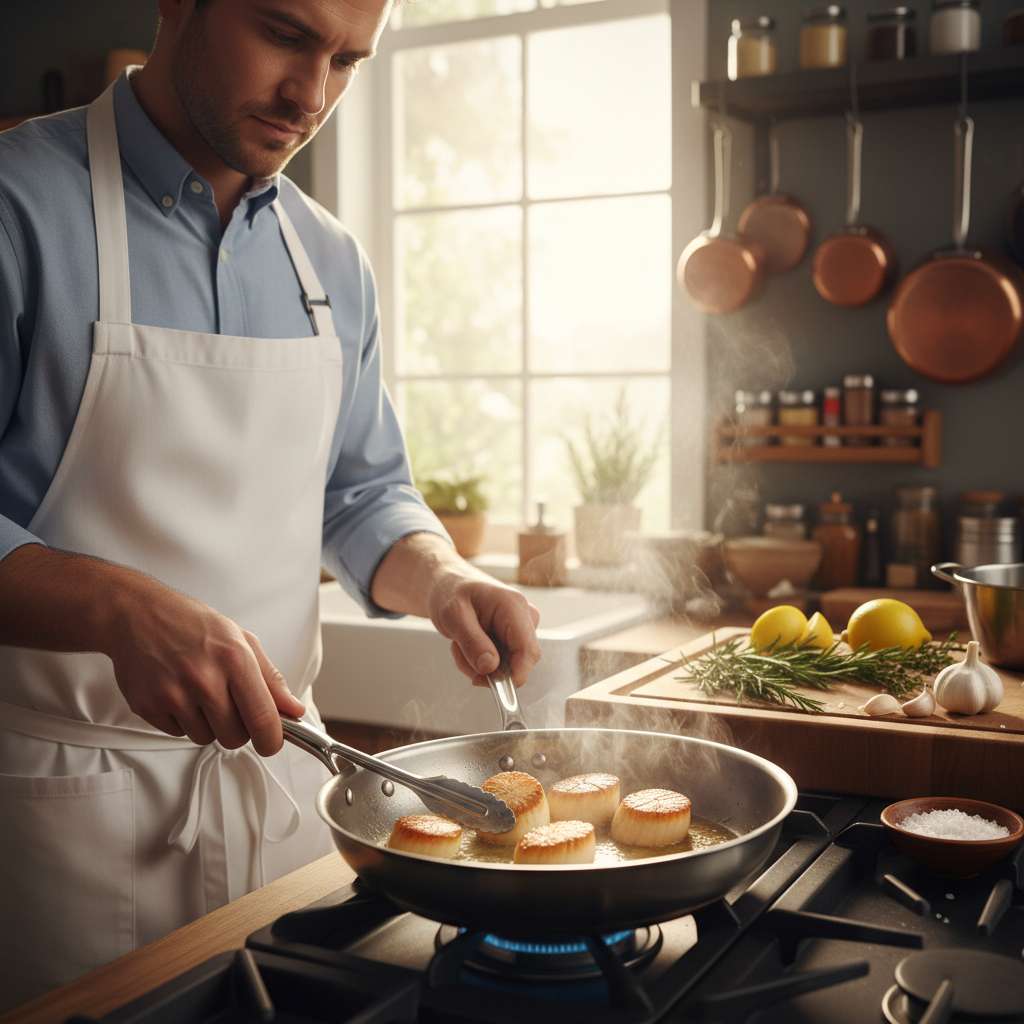
Do you dream of making a luxurious restaurant experience at home? Many people think high-end seafood is hard to cook. But, making the best seared scallops recipe is easy and quick, taking less than ten minutes.
Learning how to sear scallops unlocks their sweet, tender flavors. With the right method, you get a golden crust and a soft center. It’s fast and perfect for a relaxing dinner.
Our guide offers key seared scallops cooking tips for success. We’ll show you how to make a beautiful seared scallops with lemon butter dish. It’s sure to wow your guests. Get ready to boost your cooking skills and make your next dinner unforgettable.
Selecting and Preparing Fresh Scallops
Getting the perfect sear begins long before you start cooking. To make fresh seared scallops at home, the quality of your ingredients is key.
Understanding Dry Versus Wet Scallops
At the market, you’ll find two scallop types: dry-packed and wet-packed. Dry-packed scallops are natural and have no additives, making them the best for searing.
Wet-packed scallops, on the other hand, are treated with a phosphate solution. This solution makes them absorb water, which stops a good crust from forming when cooking.
Proper Thawing and Drying Techniques
If your scallops are frozen, thaw them in the fridge overnight. These seared scallops cooking tips will help you avoid steaming instead of searing.
After thawing, remove excess moisture. Use paper towels to dry each scallop until it’s completely dry on all sides. A dry surface is crucial for that golden-brown finish you want.
Removing the Side Muscle
Many scallops have a small, tough piece called the foot or side muscle. While it’s edible, it stays chewy even when the rest is cooked right.
Just pull this muscle away with your fingers before cooking. Removing it makes sure your seared scallops are tender in every bite.
Essential Tools and Ingredients for the Best Seared Scallops Recipe
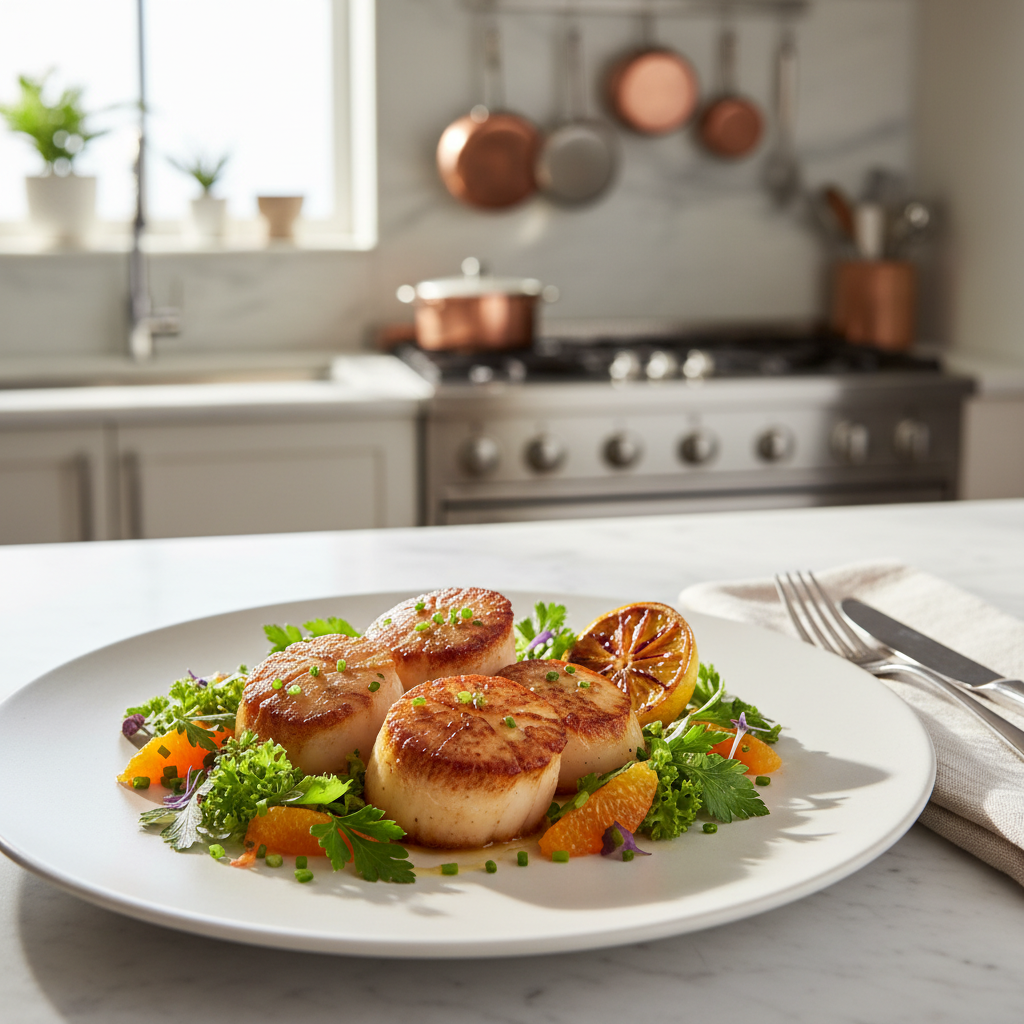
To make the best seared scallops recipe, you need the right tools. The right gear helps you get a perfect crust without overcooking the scallop’s center.
Choosing the Right Pan for Even Heat
The key to a great sear is your cookware. Cast iron skillets are perfect because they keep heat well. They beat out regular non-stick pans.
A heavy skillet is crucial for a consistent, high heat. This heat is needed for a deep, golden crust. Thin pans lose heat fast, leading to steaming instead of searing.
Selecting High Smoke Point Oils
Choosing the right oil is as important as your pan. You need an oil that can handle high heat without burning or smoking.
Avocado or grapeseed oils are great because of their high smoke points. These oils let the scallop’s natural sweetness come through without adding bad flavors.
| Oil Type | Smoke Point | Flavor Profile |
|---|---|---|
| Avocado Oil | 520°F | Neutral |
| Grapeseed Oil | 420°F | Neutral |
| Extra Virgin Olive Oil | 375°F | Robust |
Seasoning for Maximum Flavor
Seasoning at the right time is key for the best seared scallops recipe. Salt should only be added right before cooking.
Salting too early can make the scallop lose moisture. This stops it from getting a crisp outside. Waiting until the last second keeps the scallop’s texture perfect, making every bite delicious.
Step-by-Step Guide on How to Sear Scallops
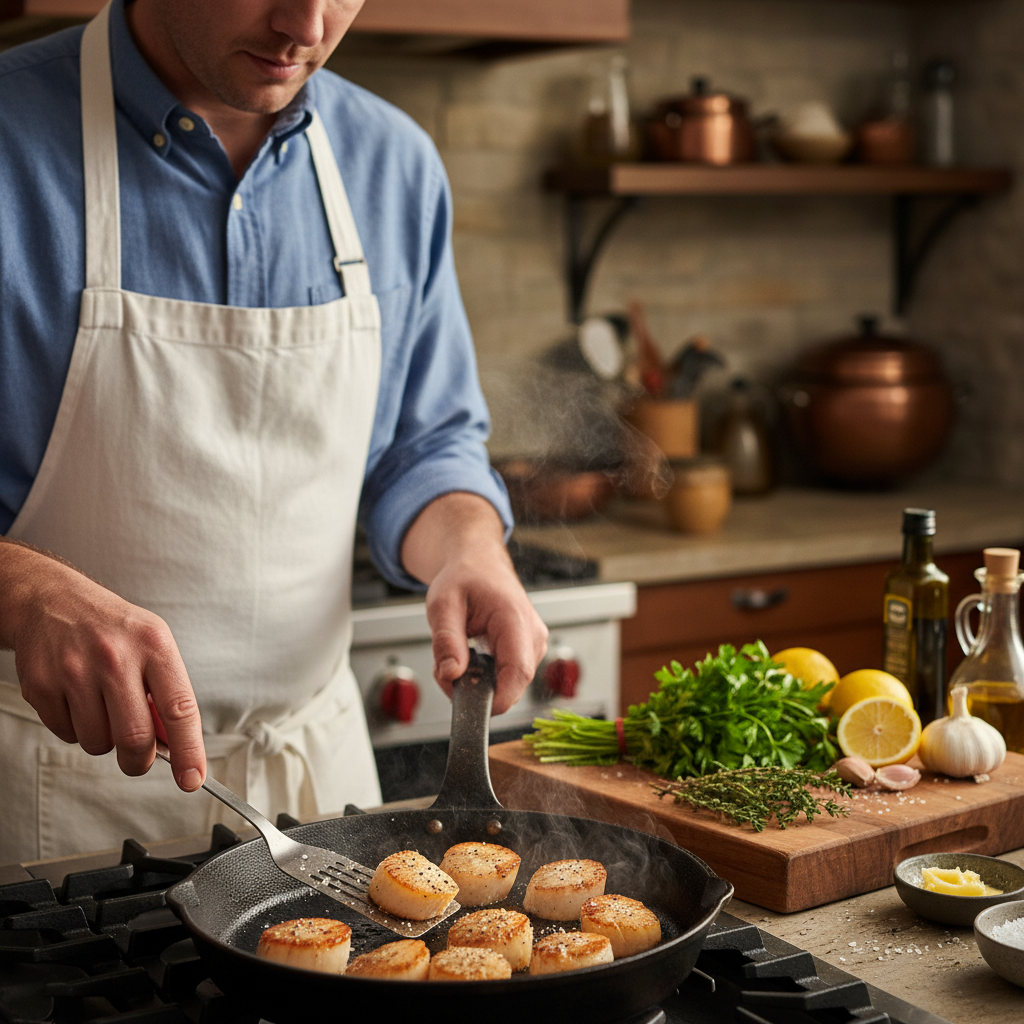
Learning how to sear scallops needs patience, precision, and the right method. By following a clear guide, you can get a professional look that shows off the scallops’ natural sweetness.
Heating the Pan to the Ideal Temperature
Begin by heating a heavy-bottomed skillet over medium-high heat. Wait until the pan is truly hot before adding oil. When the oil starts to shimmer, it’s time to add the scallops.
Placing Scallops for a Perfect Crust
Put your seared scallops in the pan carefully, making sure they don’t touch. It’s important to leave space between them. This helps the moisture evaporate, not steam the meat. If the pan is too full, you won’t get that golden-brown crust.
Timing the Sear for Restaurant-Style Results
To get seared scallops restaurant-style, don’t move them for at least two minutes. This lets the natural sugars caramelize, creating a beautiful crust.
When the edges turn opaque and the base comes off the pan easily, it’s time to flip. The center should still be a bit translucent for the best texture.
Avoiding Common Mistakes During the Cooking Process
A key seared scallops cooking tip is to avoid flipping too soon. If you flip before the crust forms, it might stick and tear. Patience is your greatest tool in the kitchen.
- Ensure the pan is hot enough before starting.
- Never overcrowd the skillet to maintain high heat.
- Use a high smoke point oil to prevent burning.
Mastering the Perfect Seared Scallops with Lemon Butter Sauce
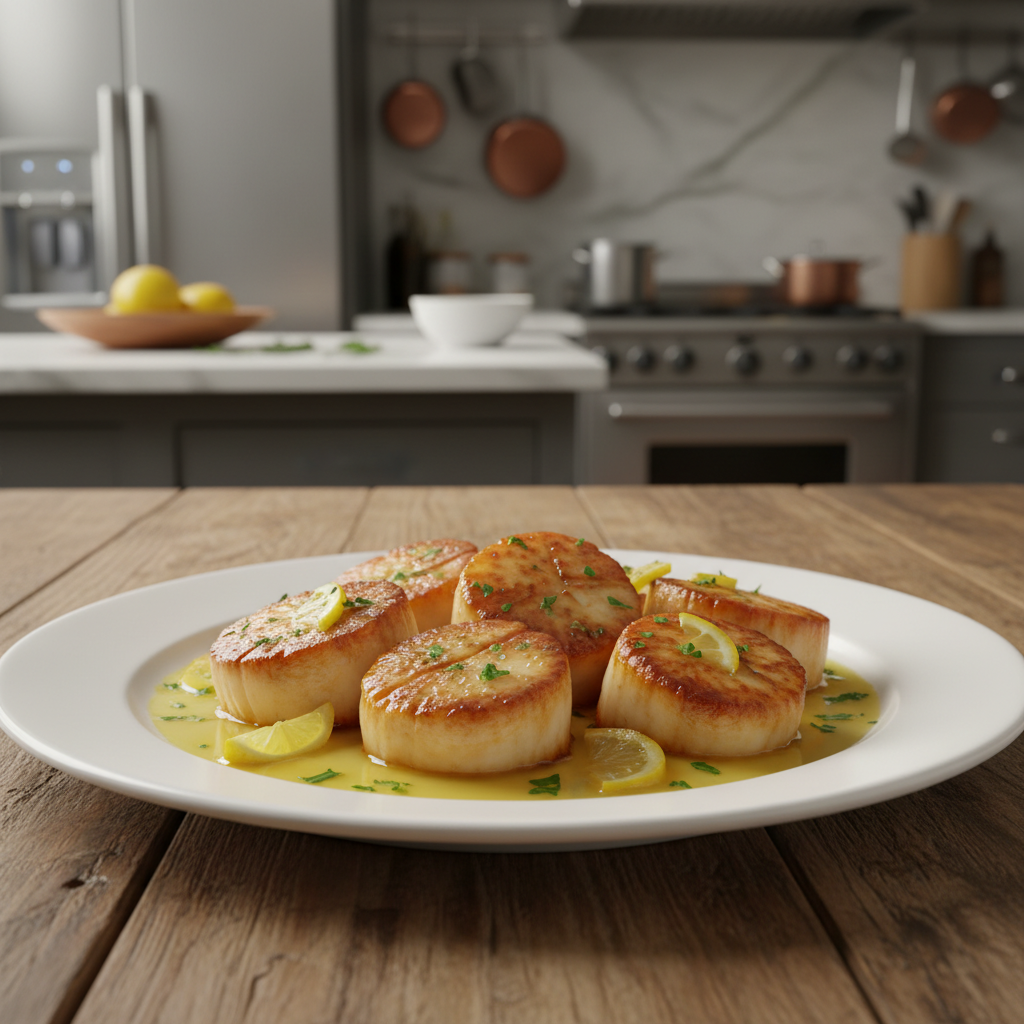
After searing your scallops, it’s time to make a rich sauce. Use the pan drippings to elevate your dinner. This makes your seared scallops with lemon butter taste like they’re from a fancy restaurant.
Deglazing the Pan for Flavor Depth
The key to a great seared scallops sauce is the fond. This is the browned bits at the bottom of your skillet. Remove the scallops, then add butter and minced shallots or garlic to the pan.
Pour in white wine or lemon juice to release the flavors. This process, called deglazing, adds a lot of taste. Stir constantly to mix in all the flavors. You’ll smell the amazing aroma right away.
Emulsifying Butter and Citrus
To get a seared scallops restaurant-style look, you need to emulsify. Lower the heat and add cold, cubed butter slowly. This keeps the sauce smooth and prevents it from breaking.
The citrus balances the butter’s richness. Keep stirring to keep the sauce creamy. A good sauce coats the spoon without separating.
Finishing Touches with Fresh Herbs
Finally, add fresh herbs like parsley or chives. They add a bright, clean finish to the sauce. Sprinkle them on just before serving to keep their color and smell.
This adds a sophisticated touch to your dish. Your guests will love the care you put into every bite. Enjoy making a fancy meal at home.
Pairing Your Dish with Complementary Seared Scallops Side Dishes
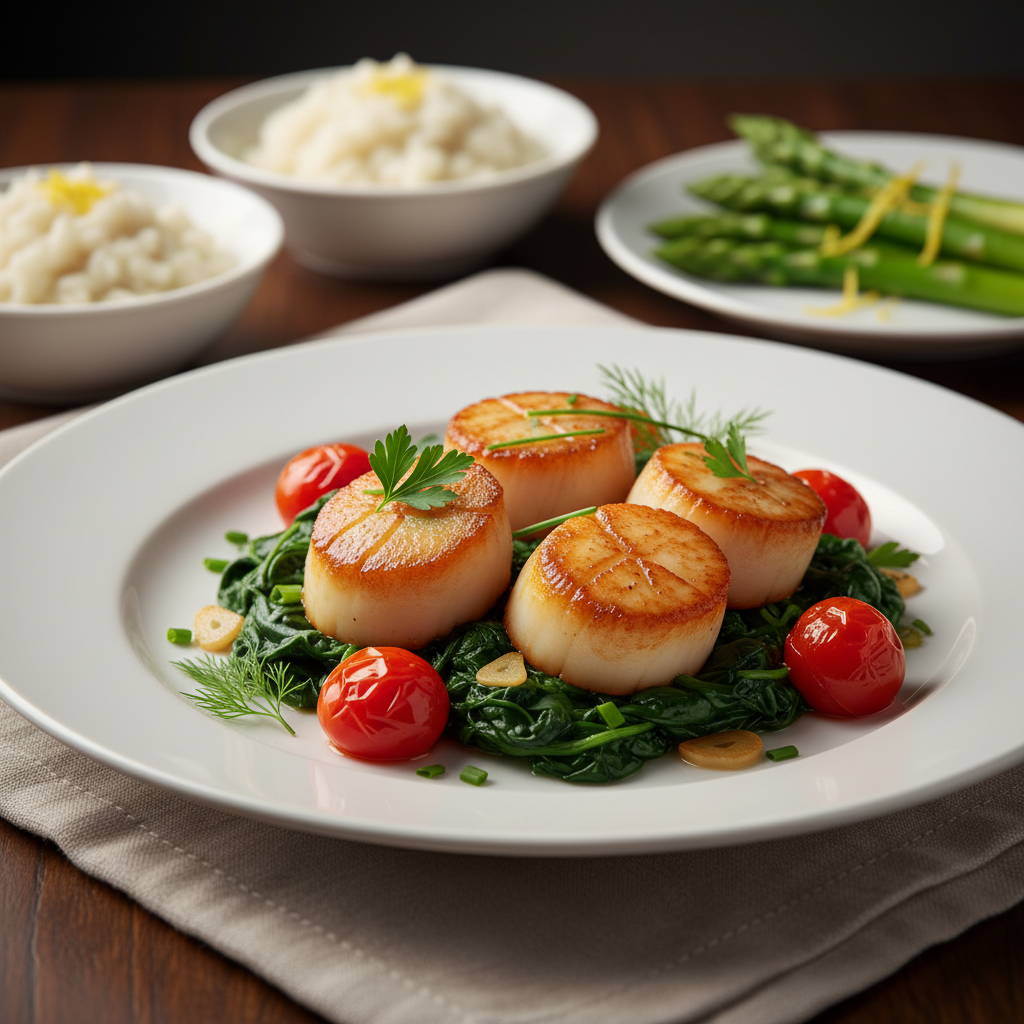
When you serve seafood, the side dishes should make it better, not worse. Choosing the right seared scallops side dishes is key to a great meal. It’s about finding the right mix of textures and tastes.
Light Vegetable Accompaniments
For a fresh taste, pick vegetables that contrast with the seafood. Roasted asparagus with lemon or sautéed baby spinach with garlic are great. They add a clean taste that lets the scallops shine.
Starch Pairings for a Balanced Meal
For a heartier meal, add a rich starch. Creamy polenta or parmesan risotto are perfect. They soak up the juices and add a smooth texture that matches the scallops’ crust.
Wine and Beverage Recommendations
Drinks can make or break the meal, especially with butter sauce. A Sauvignon Blanc or unoaked Chardonnay cuts through the richness. For non-alcoholic, try sparkling water with lime. Both keep the meal’s flavors in focus.
Conclusion
Learning to sear scallops makes your kitchen feel like a pro’s. This skill brings the fancy taste of restaurants right to your home.
Using top-notch ingredients and controlling the heat is key. Now, you know how to pick the best seafood and cook it just right for a perfect crust.
Don’t be afraid to try new sauces and sides. Pair your scallops with a crisp Sauvignon Blanc or a fresh veggie mix. It will highlight the scallops’ natural sweetness.
Cooking is all about exploring and being creative. Share your tasty dishes with loved ones to make every meal special. With each successful sear, you’ll feel more confident in the kitchen.