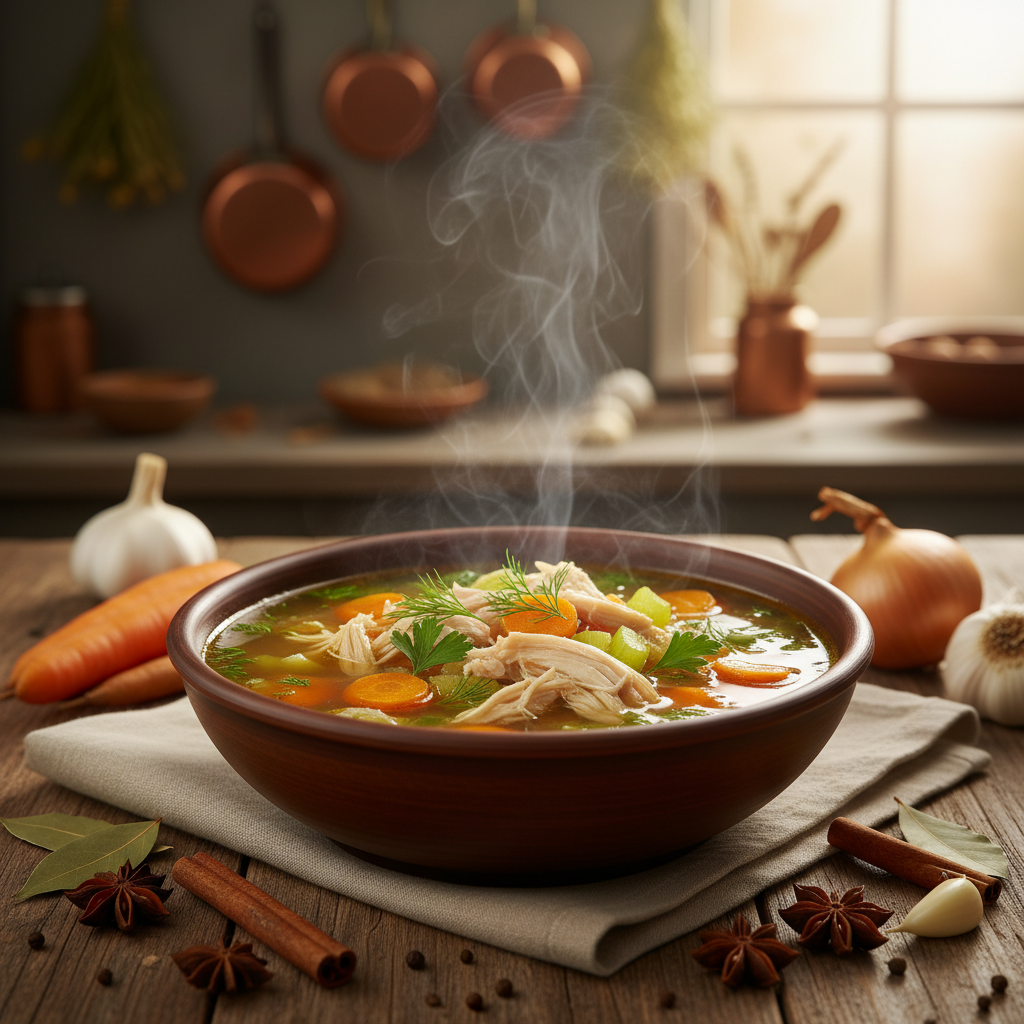
Gayle McLeod has spent over a decade refining a signature chicken soup that feels like a cozy hug for your taste buds.
You’ll find this healthy recipe leans light and brothy, built to soothe and nourish without weighing you down. It swaps heavy pasta noodles for nutrient-dense parsnips to keep the bowl bright and clean.
Start with a high-quality chicken broth — it is the foundation for any memorable homemade chicken dish. Fresh herbs and crisp vegetables lift each spoonful and boost the wellness benefits you want during cold weather.
Whether you crave a classic chicken noodle bowl or a modern variation, these recipes cover both comforts and healthful choices.
Tip: A printable soup recipe with exact measurements and step-by-step instructions is available in the detailed guide below for easy weekly meal prep.
The Timeless Comfort of Homemade Chicken Soup
There’s a simple joy in simmering stock and shredding tender meat for a family meal. That slow ritual turns basic ingredients into feel-good food that warms you from the inside out.
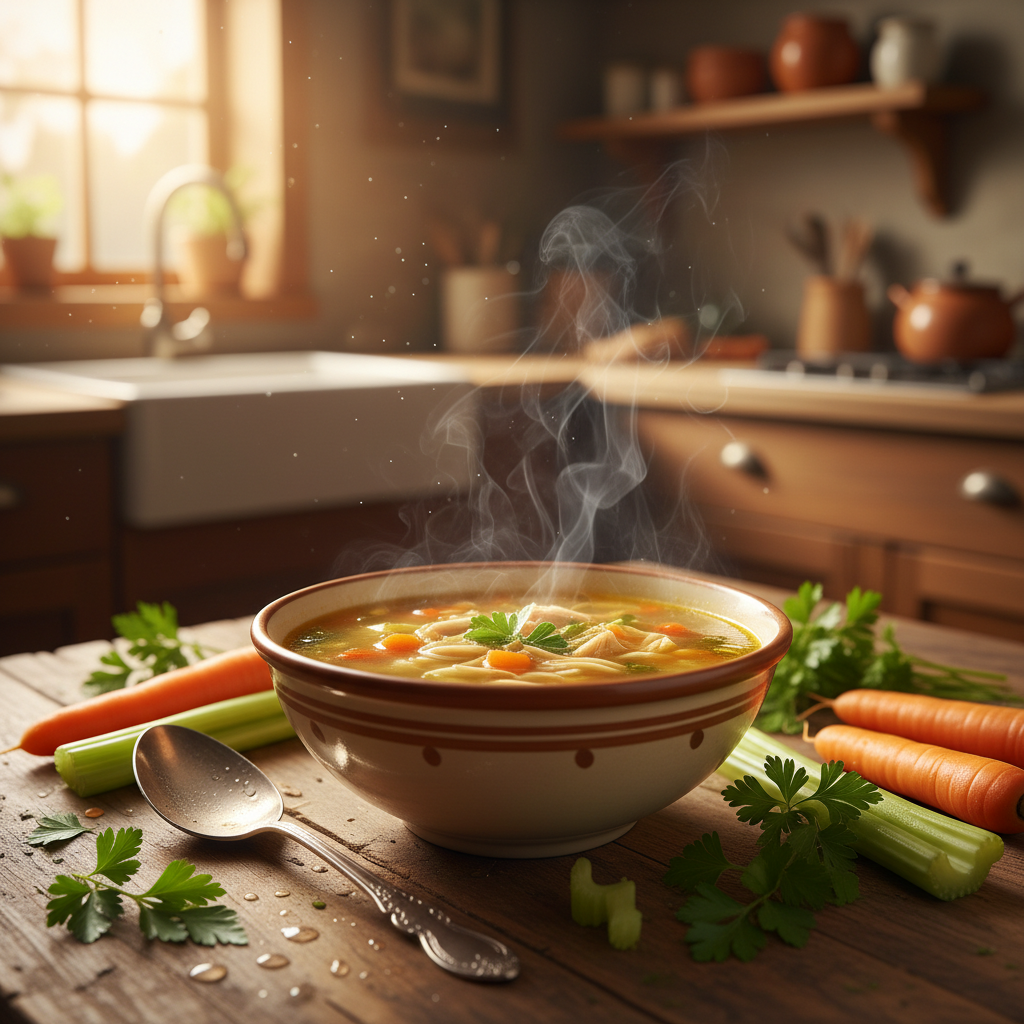
When you build a forever favorite, you often strip the dish back to its core: clear broth, soft shredded chicken, and bright vegetables. Leaving out pasta or noodles makes the bowl lighter and more nourishing without losing comfort.
Making this at home is a ritual passed down through generations. The small investment of time yields depth of flavor that store-bought options rarely match.
- Comfort: A simple bowl soothes and heals.
- Flexibility: Skip noodles or add them for heartier fare.
- Community: It’s a staple that brings families to the table.
Essential Ingredients for a Flavorful Pot
Start by gathering quality stocks and whole cuts to build deep, nourishing flavor in your pot. Use 2 lbs of bone-in, skin-on pieces so the simmer yields a collagen-rich base that boosts mouthfeel and body.
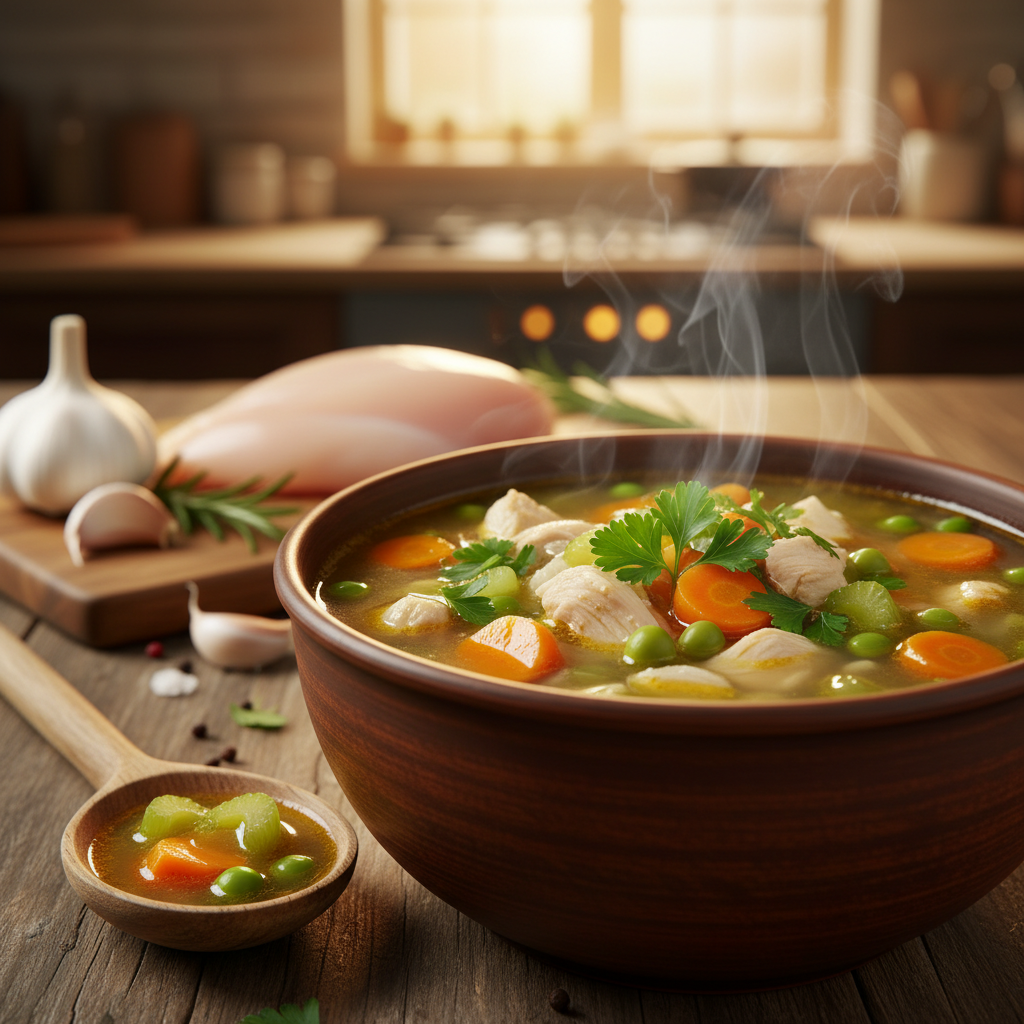
Selecting high-quality broth: Pour 8 cups of low-sodium chicken broth or stock to balance your vegetables and herbs. Low sodium keeps the recipe flexible and lets you control final seasoning.
Choosing your chicken cuts
Use bone-in portions for richness and shred the meat after poaching. This gives you tender meat and a savory depth in every serving.
- Vegetables: 1 cup chopped veggies—uniform carrots, celery, and yellow onion—for even cooking in the pot.
- Herbs and aromatics: 4 garlic cloves, a single bay leaf, and fresh thyme sprigs simmered with the stock.
- Seasoning: 1 teaspoon kosher salt and a pinch of black pepper to finish; adjust to taste.
Tip: If you plan a chicken noodle variation, reserve noodles and add them near the end to avoid soggy texture. Simple ingredients and careful timing make a homemade chicken soup that tastes like comfort and wellness in one bowl.
Mastering the Art of Poaching Chicken
Poaching is the gentle method that keeps meat tender while letting the broth build real depth.
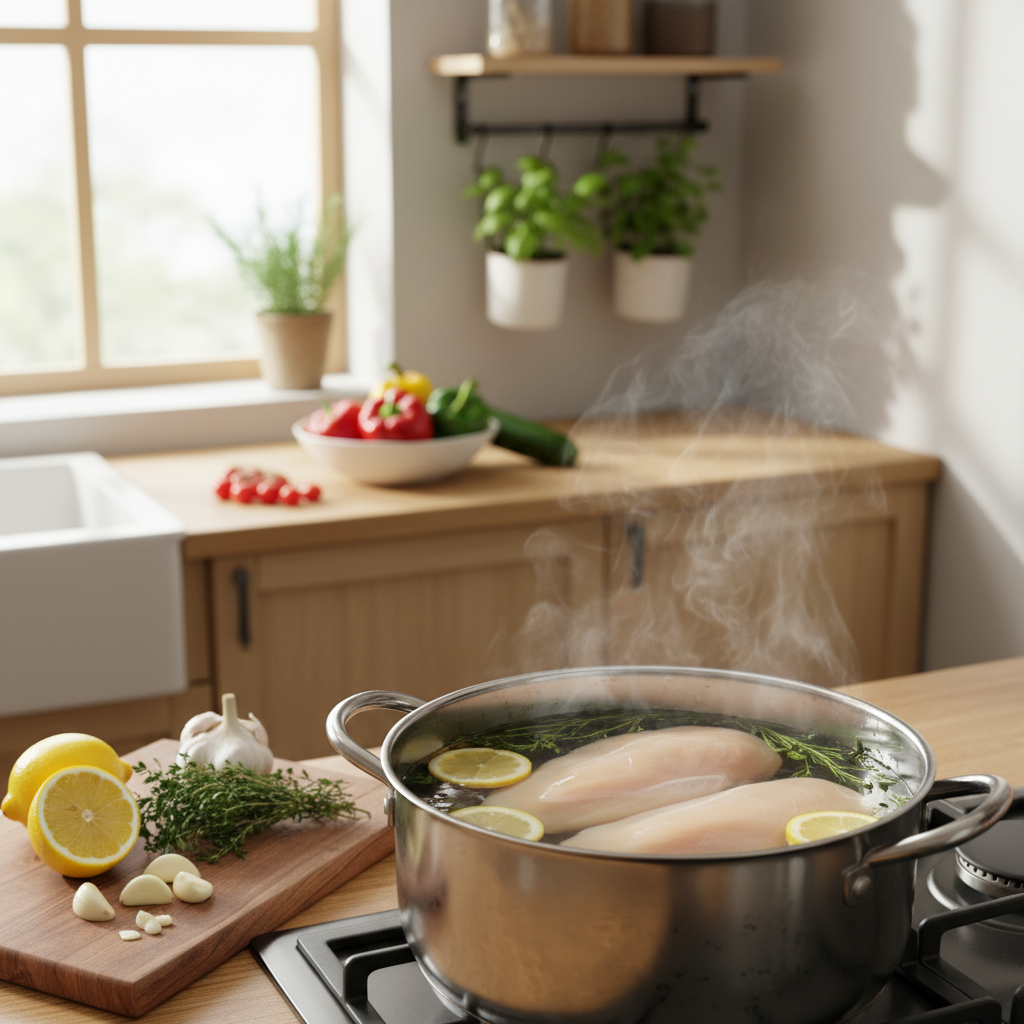
Start with warmed chicken broth in a medium pot and use medium heat until the liquid just reaches a boil. Immediately reduce heat to maintain a gentle simmer.
How to poach:
- Add chicken pieces so they sit fully submerged in the stock with a bay leaf and fresh thyme.
- Poach for about 15 minutes — this short time preserves juiciness and infuses flavor.
- Check the internal temperature; it must read 165°F on an instant-read thermometer.
When cooked, lift the meat out and shred it with two forks. Return shredded meat to the pot for a final simmer and to meld flavors. This is a reliable way to build a rich, clear chicken noodle recipe base without overcooking delicate ingredients.
Techniques for Building Deep Flavor
Good flavor starts before you add stock. Heat a heavy pot until it’s hot, add a little fat, and brown the meat in batches. This searing creates caramelized bits that amplify the final broth.
After browning, cook the onion, celery, and garlic for several minutes until soft and fragrant. Sprinkle in 1 teaspoon of salt and a dash of pepper while they sweat to season from the start.
The secret to browning
When you pour in the stock, bring it to a boil and use a spoon to scrape the bottom of the pot. Those browned bits dissolve and build real depth of flavor.
- Use a bay leaf and fresh herbs to balance the richness of meat and fat.
- Simmer the stock, then add chicken back so the meat stays tender and flavorful.
- This simple technique turns a basic chicken noodle recipe into a complex, satisfying meal.
Adding Nutrient-Dense Vegetables and Herbs
Adding colorful veggies and aromatic herbs elevates flavor while boosting daily nutrients.
Start with a cup of chopped carrots, celery, and onion. These three give vitamins, fiber, and a gentle sweetness that pairs with your protein.
Add one clove of garlic for depth and use 1 teaspoon of salt to help draw out the natural flavor. A pinch of pepper balances the taste.
Keep the heat low so the vegetables become tender but not mushy. Adjust cooking minutes to preserve texture and color.
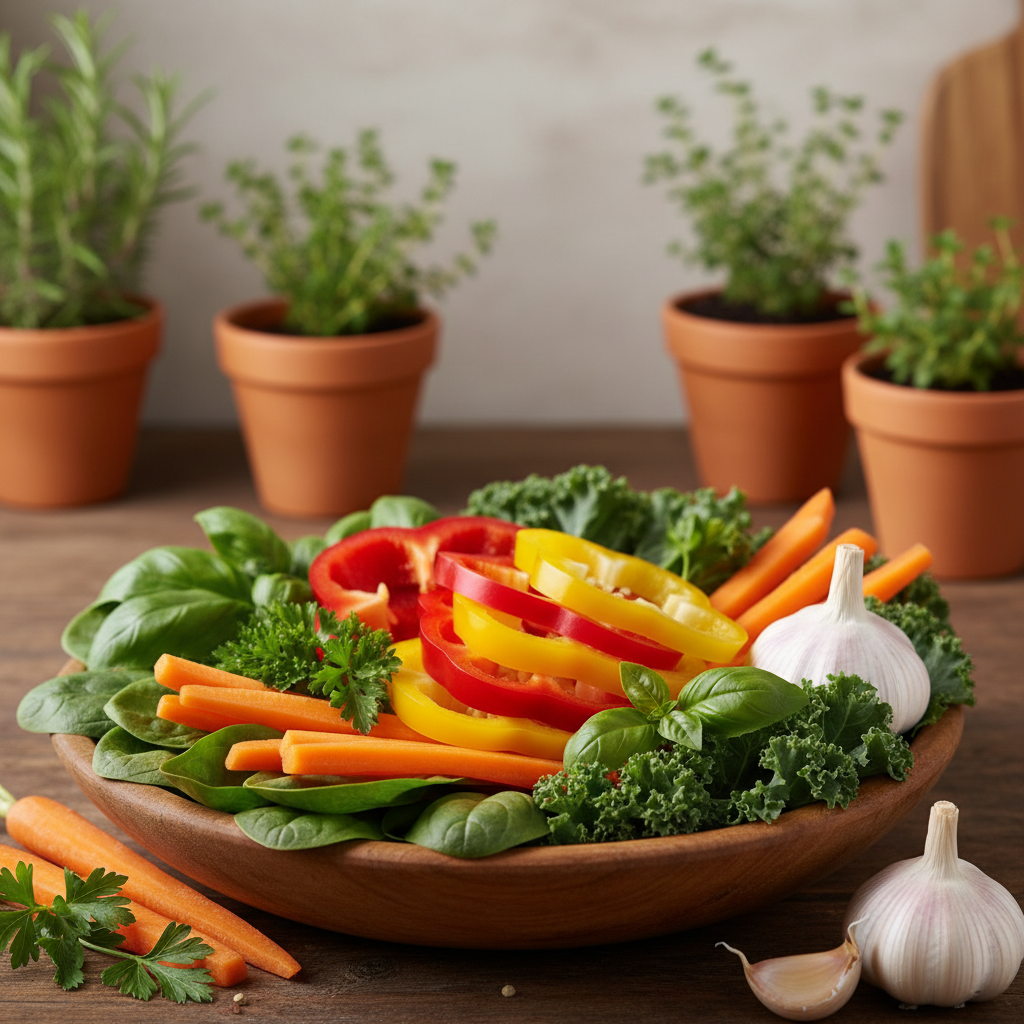
Stir in fresh thyme and other herbs during the final minutes to keep their bright aroma. Fresh herbs finish the bowl and lift the stock.
Tip: Use high-quality meat and produce to create a balanced chicken noodle bowl that supports wellness.
Creative Variations for Your Chicken Soup
Swap starches, add bright greens, or stir in a light roux to redefine comfort food for your weeknight table. These quick riffs keep the base of high-quality chicken broth or stock while changing texture and nutrition.
Creamy Riffs with Roux
Whisk a roux of equal parts butter and flour, then slowly add hot stock until smooth. This builds a silky, creamy body without heavy cream.
Tip: Use just one tablespoon each of fat and flour per cup of broth for a light creaminess that won’t overwhelm flavor.
Adding Zoodles and Ginger
Replace noodles with zoodles for a low-carb, fresh bite. Grate a thumb of ginger into the pot for bright spice that pairs well with garlic and onion.
Result: A modern, lighter bowl with a crisp texture and warming aroma.
Incorporating Hearty Grains
Stir in cooked rice, quinoa, or barley to make the dish a filling family meal. Grains absorb broth and add fiber, making each cup more satisfying.
- Use one cup cooked grain per four servings.
- Finish with chopped carrots, celery, or fresh herbs for balance.
Tips for Storing and Reheating Your Batch
Proper storage keeps flavors bright and makes weekday dinners effortless. Let the pot cool to room temperature before you seal leftovers; this helps preserve the garlic and other aromatics.
Refrigerate in airtight containers for 4 to 5 days. If you need longer shelf life, freeze portions in freezer-safe bags or containers for up to 3 months. Seal tightly to avoid freezer burn and flavor loss.
Meal-prep tip: Flavors often deepen after a day in the fridge, especially with a good stock base. That makes this chicken noodle variation ideal for planning lunches or quick dinners.
- Thaw frozen portions in the fridge overnight for best texture.
- To reheat, place a single serving in a pot over medium heat for a few minutes until warmed through.
- Use gentle heat so the meat stays tender and vegetables keep their texture.
Final note: Handle and store with care and you’ll enjoy consistent, comforting bowls for days to come.
Health Benefits of Warm Broth
A warm bowl of broth does more than soothe; it delivers quick hydration and vital nutrients. You’ll feel relief from congestion while your body absorbs vitamins and minerals in easy-to-digest form.
Immunity Boosting Properties
Support for recovery and immune health
The lean protein in shredded chicken helps repair tissues and supports immune cells. Vitamins from simmered vegetables and herbs add antioxidants that help your immune system respond to stress.
Drinking a warm bowl of chicken soup can also help keep you hydrated. The liquid restores fluids and salts you lose during a fever or cold.
| Benefit | Why it helps | How often |
|---|---|---|
| Hydration | Warm broth replaces fluids and soothes the throat | Daily while ill |
| Protein support | Lean chicken supplies amino acids for repair | 1–2 servings per day |
| Immune nutrients | Vitamins and minerals from vegetables boost defenses | Regularly as part of meals |
Practical tip: Make homemade broth and enjoy the ritual of sipping warm, nourishing bowls. The comfort you get is both physical and mental, and regular inclusion in your diet keeps meals nutrient-dense and gentle on digestion.
Conclusion
A clear, reliable recipe gives you a simple way to make nourishing bowls from quality stock and fresh ingredients. In a single pot you can build real flavor and texture without fuss.
Use good vegetables like carrots, celery, and yellow onion with thyme and garlic. Keep an eye on heat and reduce heat when needed. Poach the meat gently, season with salt, pepper, and a bay leaf, and simmer for a few minutes to meld flavor.
Cook once and enjoy for days, or freeze portions for months. Try variations with noodles or grains and share your results below. Your feedback helps others refine these recipes and learn new ways to cook well.