
Have you ever craved a meal that feels like a warm hug? A dish that comforts you after a long day and transports you to another place? That’s exactly what this traditional Peruvian Aji de Gallina offers.
This classic comfort food blends European techniques with local ingredients. It creates something uniquely wonderful. The name translates to “chicken chili,” but it’s so much more than that.
Imagine tender shredded chicken in a creamy, mildly spicy sauce. Instead of cream cheese, bread and nuts thicken it beautifully. This approach keeps the flavors genuine and rich.
You can make this wonderful recipe with leftover chicken or turkey. It’s practical for home cooking and perfect for any time you want something special. Let’s create this delicious stew together!
What Is Peruvian Aji de Gallina?
Picture a meal that combines European elegance with vibrant South American ingredients. This traditional chicken stew features shredded poultry in a creamy, mildly spicy sauce that comforts and delights.
The name translates to “chicken chili” or “hen’s chili” in English. Don’t let that simple translation fool you about its complex flavor profile.
This beloved dish has fascinating historical roots dating back to the 16th century. Spanish and French culinary traditions merged beautifully with local ingredients.
It evolved from manjar blanco, which means “white dish.” This earlier preparation combined ground almonds, milk, sugar, and either chicken or fish.
French chefs fleeing their revolution brought European techniques to Peru. They found employment and blended their skills with indigenous ingredients.
The typical components create a perfect harmony. You’ll find shredded chicken, aji amarillo chili, bread-thickened sauce, nuts, and cheese.
This comfort food is often served with rice, potatoes, and hard-boiled eggs. The combination creates a complete, satisfying meal that warms both body and soul.
While traditionally made with chicken, creative variations exist. Some cooks use turkey or even canned tuna for different twists.
The aji gallina represents the melting pot nature of its cuisine. European methods meet indigenous ingredients in perfect balance.
This authentic version maintains traditional methods without modern shortcuts. You won’t find cream cheese here, just genuine techniques that honor the recipe’s history.
Gathering Your Ingredients

Getting your ingredients ready makes cooking smoother and more enjoyable. Let’s explore everything you need to create this wonderful dish. Proper preparation ensures authentic flavors and perfect results.
For the Chicken and Broth
Start with bone-in chicken pieces for the best flavor. Thighs or breasts work beautifully. The bones add richness to both the meat and your homemade stock.
You’ll need these ingredients:
- 2 pounds bone-in chicken
- 1 carrot, roughly chopped
- 2 celery stalks
- 1 medium onion
- 4 cups water
- Salt and pepper to taste
Using bone-in pieces creates a more flavorful broth than boneless options. The collagen from bones gives your sauce better body and richness.
For the Creamy Sauce Base
The sauce transforms simple ingredients into something magical. Each component plays a specific role in creating that signature creaminess.
Gather these items:
- 4 slices white bread, crusts removed
- 1 cup evaporated milk or fresh milk
- 1/4 cup walnuts
- 1/4 cup grated Parmesan cheese
- 2 tablespoons aji amarillo paste
- 2 tablespoons vegetable oil
- 1 teaspoon ground turmeric
- 1/2 teaspoon ground cumin
Bread acts as your natural thickener instead of cream cheese. Soaking it in milk creates the perfect creamy base. Nuts add texture and subtle flavor notes.
If you can’t find aji amarillo paste, use another yellow chili paste. The color and mild heat are what matter most. Look for authentic pastes in Latin markets or online.
For Serving and Garnish
The traditional accompaniments complete your meal beautifully. They provide contrasting textures and flavors that balance the rich sauce.
You’ll want to have ready:
- Cooked white rice
- Boiled yellow potatoes
- 4 hard-boiled eggs, halved
- 1/4 cup black olives
Traditional Peruvian black olives have a distinct flavor. If unavailable, Kalamata olives make a good substitute. Their briny taste complements the creamy sauce perfectly.
Yellow potatoes hold their shape well when boiled. Their buttery texture pairs wonderfully with the saucy chicken. The eggs add protein and visual appeal to your finished dish.
Step-by-Step Cooking Instructions
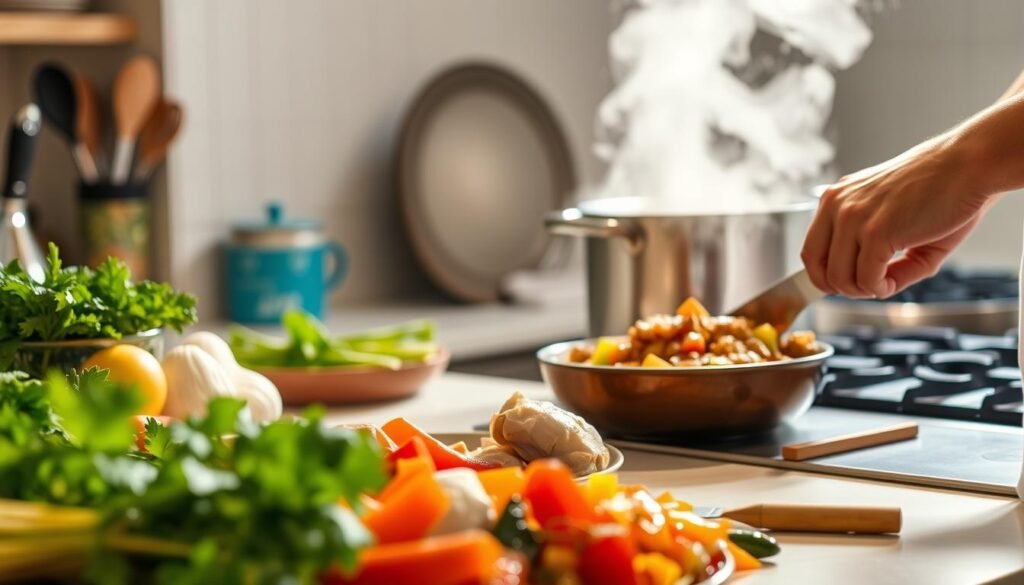
Ready to transform your ingredients into something magical? This cooking process creates amazing flavors through simple techniques. Let’s walk through each stage together.
Step 1: Poach and Shred the Chicken
Place your chicken pieces in a large pot with chopped vegetables. Add 4 cups of water and bring to a simmer.
Cook for 15-45 minutes depending on thickness. The time varies based on your chicken pieces.
Remove the chicken when fully cooked. Let it cool enough handle before shredding.
Reserve the flavorful stock for your sauce. Shred the meat into even pieces for your stew.
Step 2: Prepare the Sauce Base
Soak your bread in milk or evaporated milk. This creates the creamy foundation.
Heat oil in a pan and sauté onions until soft. Add garlic and aji amarillo paste.
Include spices like turmeric and cumin. Cook for 2-3 minutes to release flavors.
This creates the flavor base called sofrito. It’s essential for authentic taste.
Step 3: Blend and Combine
Combine the soaked bread, walnuts, and Parmesan cheese. Blend smooth until creamy.
Add this mixture to your cooked sofrito. Stir well to combine all ingredients.
Incorporate your shredded chicken into the pan. Pour in reserved stock gradually.
Adjust consistency with more stock if needed. The sauce should coat the chicken nicely.
Step 4: Simmer to Perfection
Reduce heat to low and simmer for 10 minutes. This allows flavors to meld together.
Stir occasionally to prevent sticking. The sauce will thicken beautifully during this time.
Taste and adjust seasoning with salt pepper. Your cooking is almost complete!
Total active cooking time is about 25 minutes. The result is worth every moment.
Serving Your Peruvian Aji de Gallina
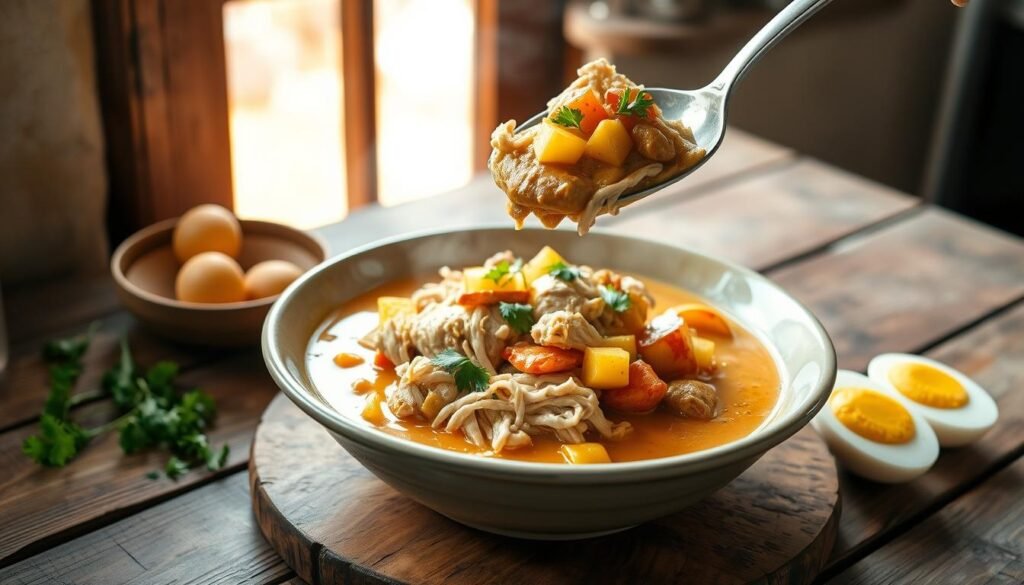
Now comes the most rewarding part – presenting your beautiful creation! The final presentation transforms your cooking into a complete cultural experience.
Traditional serving begins with a bed of fluffy white rice. This acts as the perfect base for your rich, creamy sauce. The grains absorb the flavorful liquid beautifully.
Arrange your boiled potatoes around the edges of the plate. Yellow varieties work best as they hold their shape. Their buttery texture complements the main dish wonderfully.
Add halved or quartered boiled eggs for extra protein and visual appeal. Place them strategically around the plate. The yellow yolks create a lovely color contrast.
Scatter black olive slices across the top for that authentic touch. Their briny flavor cuts through the richness. Use about a tablespoon per serving.
For an extra bit of elegance, add these optional garnishes:
- Extra chopped walnuts for crunch
- Additional Parmesan cheese sprinkles
- Fresh parsley leaves for color
Keep all components warm until serving time. The sauce should be served hot over warm rice. This ensures the best eating experience.
Each element carries cultural significance in this cuisine. The potatoes honor Peru’s agricultural heritage. The eggs represent prosperity and completeness.
For family meals, serve everything family-style in separate bowls. For guests, create individual plates with careful arrangement. Either way, your meal will impress everyone!
Why This Recipe Works Without Cream Cheese
Ever wonder how this classic dish achieves its signature creaminess without modern shortcuts? The secret lies in traditional techniques that create authentic texture and flavor.
Instead of cream cheese, this recipe uses a brilliant combination of simple ingredients. Soaked bread forms the perfect creamy foundation when blended with other components.
The bread acts as a natural thickener when soaked in milk or evaporated milk. This method has deep roots in traditional cooking methods.
When blended with walnuts and Parmesan cheese, it creates a rich, velvety sauce. The result is creaminess that feels authentic rather than heavy.
This approach offers several advantages over cream cheese:
- Better flavor balance – The bread-milk base lets other ingredients shine through
- Lighter texture – The sauce feels creamy without being overly rich
- Nutritional benefits – You get natural ingredients instead of processed cheese
- Cultural authenticity – This method honors the dish’s true origins
The traditional thickening technique actually makes preparation easier. You simply blend soaked bread with other sauce ingredients.
This method creates a sauce that perfectly complements the shredded chicken. It coats each piece beautifully without overwhelming the other flavors.
Your finished chicken stew will have authentic texture and taste. The sauce will be creamy yet light enough to enjoy with all the traditional accompaniments.
This approach maintains the cultural integrity of the dish. You’re experiencing the same flavors and textures that made this recipe beloved for generations.
The bread-thickened method creates a sauce that’s both comforting and sophisticated. It proves that sometimes the traditional way is actually the best way.
Tips for the Best Peruvian Aji de Gallina
Want to make your chicken stew truly unforgettable? These simple tips will help you create the perfect balance of flavor and texture every time.
Start with the right chicken selection. Use both white and dark meat for the best results. This combination gives you excellent flavor and keeps your shredded chicken moist.
Bone-in pieces work better than boneless options. They create a richer stock during cooking. This flavorful liquid becomes the base for your amazing sauce.
Control your spice level carefully. Adjust the amount of aji amarillo paste to match your preference. Start with two tablespoons and add more if you like extra heat.
Soak your bread completely in milk. This step ensures a smooth, lump-free sauce. Let it sit for at least five minutes before blending.
Blend your sauce ingredients until perfectly smooth. This creates the creamy consistency that makes this dish so special. Take your time with this important step.
Simmer your stew gently over low heat. This prevents burning and allows flavors to develop properly. Stir occasionally during this cooking time.
Always use your reserved poaching liquid. This stock adds incredible depth to your sauce. Plain water or store-bought stock just can’t match this flavor.
For meal planning convenience, freeze leftovers in airtight containers. They keep well for up to three months. Thaw overnight in your refrigerator before reheating.
Can’t find aji amarillo? Substitute with other yellow chili pastes. The color and mild heat matter most here. Look for options at international markets.
Serve your stew immediately after cooking. This ensures the best texture and flavor experience. The sauce tastes perfect when freshly made.
Remember these key points for success:
- Mix chicken types for balanced flavor and moisture
- Poach with bones for superior stock
- Adjust chili paste to control spice level
- Soak bread thoroughly for smooth sauce
- Blend until completely smooth
- Simmer gently to prevent burning
- Use reserved cooking liquid for best flavor
- Freeze leftovers for future meals
- Substitute chilies if necessary
- Serve immediately for optimal taste
Following these tips will give you restaurant-quality results at home. Your cooking skills will shine through in every delicious bite!
Conclusion
You’ve just discovered how to create a classic comfort food using traditional methods. This chicken stew blends rich history with practical modern cooking.
Your homemade version uses simple ingredients like bread and nuts for creaminess. It honors authentic flavors without shortcuts. The recipe works beautifully with leftover chicken or planned meals.
Once your poultry is cooked, the sauce comes together in minutes. Serve it over rice with potatoes, eggs, and olives for a complete experience.
This dish represents the beautiful fusion in its cuisine. Try making it at home to enjoy genuine flavors and textures. You’ll create something both comforting and memorable!
FAQ
Can I use a different type of chili if I can’t find aji amarillo?
Yes, you can! While aji amarillo gives the dish its signature flavor, a mix of a milder chili like poblano with a bit of habanero for heat can work in a pinch. Just adjust the amount to your taste.
How do I store leftovers, and how long will they keep?
Store your leftover stew in an airtight container in the refrigerator. It will stay fresh and delicious for up to 3 days. Reheat it gently on the stovetop with a splash of chicken stock or water to keep the sauce creamy.
Is evaporated milk really necessary for the sauce?
A> Evaporated milk is traditional and provides a rich, creamy texture without the sweetness of regular milk. For the most authentic results, it’s highly recommended. It helps create that luxuriously smooth sauce base.
My sauce seems too thick. What should I do?
No problem! This is an easy fix. Just gradually whisk in a little more of the reserved chicken stock until the sauce reaches your preferred consistency. Remember, it will thicken a bit more as it simmers.
Can I make this dish ahead of time?
Absolutely. In fact, the flavors often meld and improve overnight. You can prepare the entire stew, let it cool, and refrigerate it. Gently reheat it before serving with your freshly boiled eggs and potatoes.