Imagine a perfect evening with friends around a table. They all stare at a dish that looks like art. Making a gourmet recipe at home is a source of pride. It turns any dinner into a special event.
Learning to make Tuna Tartare with Salmon Caviar and Egg Yolk Sauce is a skill. It’s about mixing delicate textures with strong flavors. This dish is perfect for any special occasion, whether it’s a big holiday or a cozy dinner.
This guide will help you make a meal that looks as good as it tastes. You’ll impress your family and friends with your new skills. Start mastering these advanced cooking techniques today.
- Learn to balance complex textures for a professional finish.
- Discover foundational techniques for high-end appetizer preparation.
- Gain confidence in creating visually stunning, restaurant-quality plates.
Essential Ingredients and Sourcing
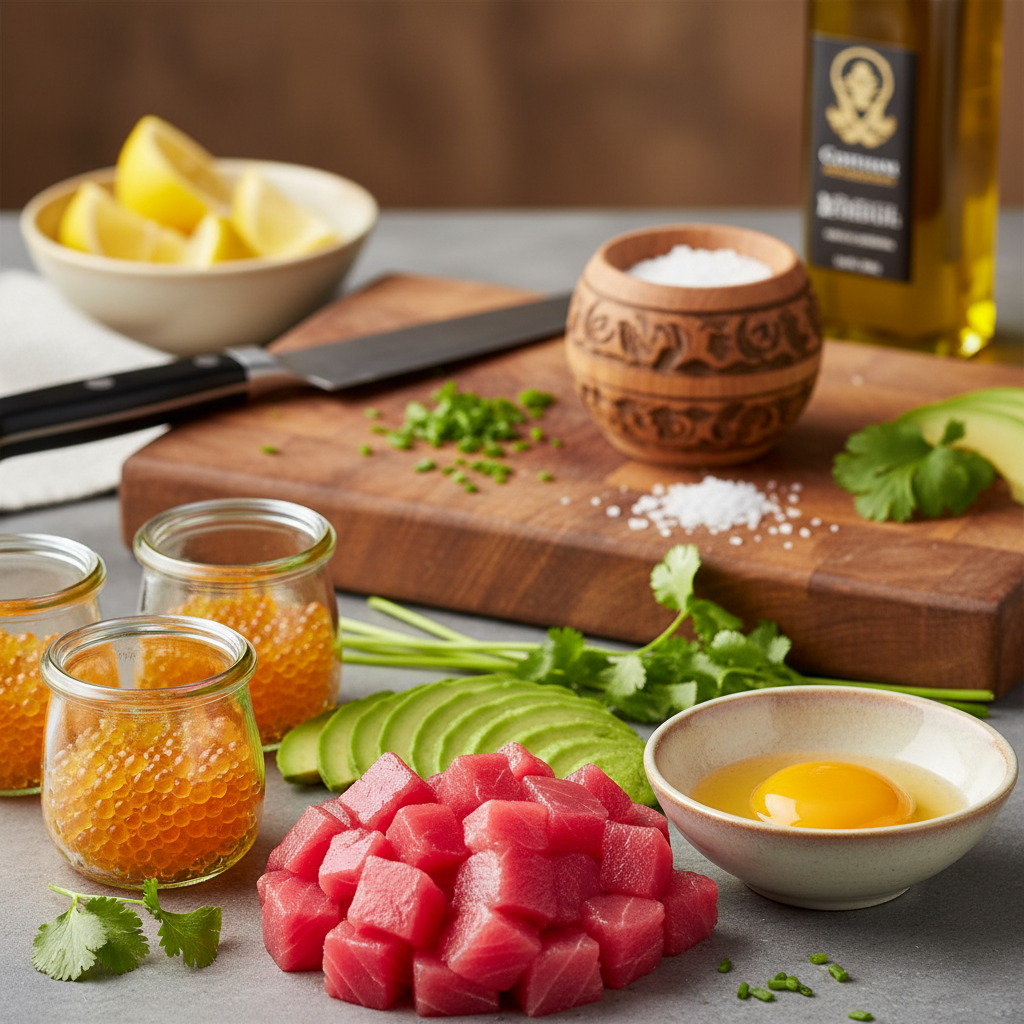
When making a fancy appetizer, the quality of your ingredients matters a lot. The success of this seafood dish depends on getting the best products at your local market.
Selecting High-Quality Sashimi-Grade Tuna
Always get exactly one pound of fresh, sashimi-grade tuna for this recipe. It’s best to go to a trusted greenmarket or a seafood club. This ensures the fish was handled well.
Choose the tuna belly for its buttery texture and great taste. Using fresh ingredients like this is crucial for both safety and taste.
Choosing the Right Salmon Caviar
Salmon caviar adds a key umami flavor to your dish. When picking your roe, look for these qualities for a top-notch experience:
- Firmness: The eggs should be firm and not mushy.
- Color: Choose eggs with a bright, orange color.
- Brine: The liquid should be clear, showing it’s clean and fresh.
Quality Standards for Farm-Fresh Eggs
Your yolk-based sauce is key to the dish. For the best sauce, use high-quality, farm-fresh eggs.
These eggs give a richer color and better emulsion than store eggs. Always check the shell integrity and look for bright, deep gold yolks for the best sauce.
Preparing the Tuna Tartare with Salmon Caviar and Egg Yolk Sauce
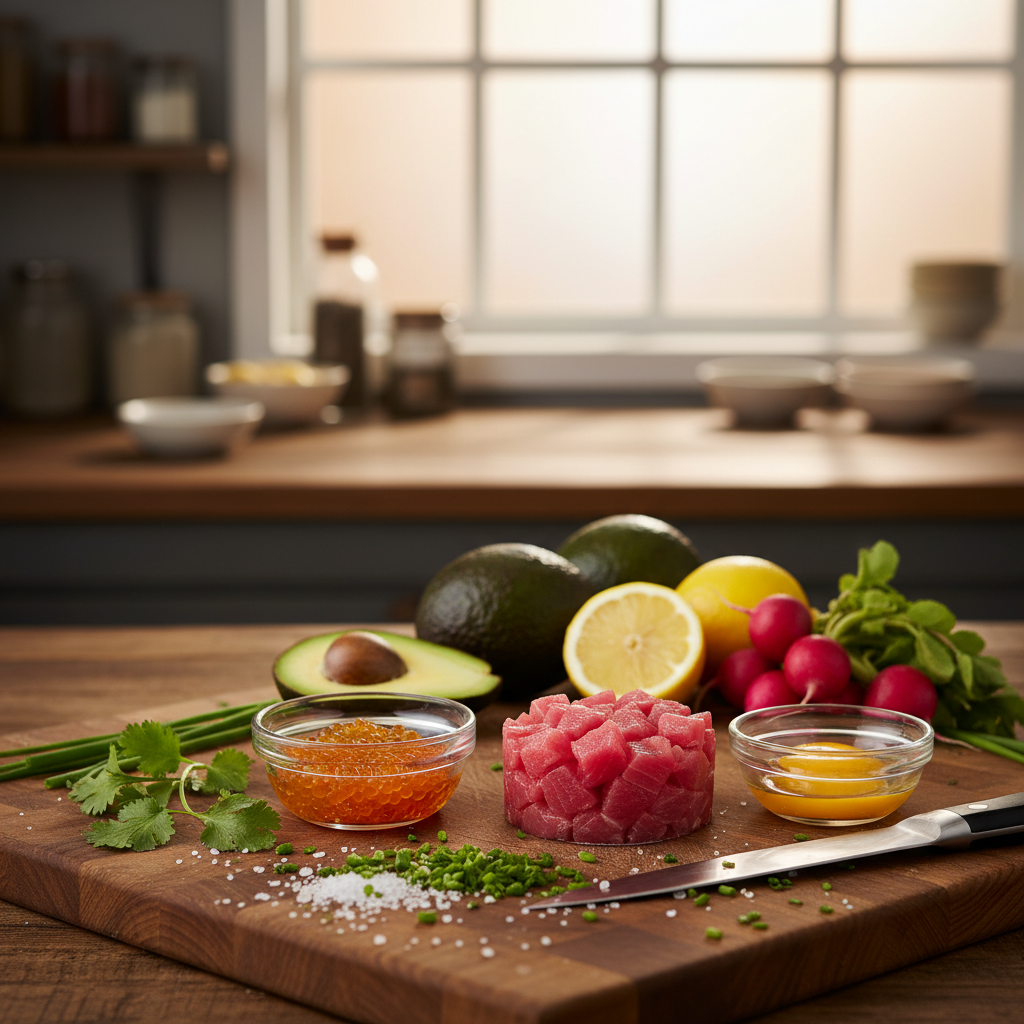
The secret to a great tartare is in how you prepare your ingredients. When using fresh ingredients, aim to keep the fish’s quality high. This makes your fusion cuisine dish even better.
Cleaning and Dicing the Tuna
Proper Knife Techniques for Uniform Cubes
Begin by removing sinew or dark bloodlines from the tuna with a sharp knife. You need to cut the tuna into 1/4 inch cubes for a uniform mouthfeel. Use a smooth motion to cut, not press down, to keep the fish’s texture.
Maintaining Temperature Control for Food Safety
Keeping the tuna at the right temperature is key. Wrap the tuna in plastic wrap and freeze it for 10-15 minutes before cutting. This makes cutting easier and keeps the tuna safe to eat.
Seasoning the Base
Balancing Acidity and Umami
After cutting the tuna, season it quickly to keep the flavors in. You need to balance the tartness of citrus with the richness of capers and shallots. Carefully fold these flavors into the tuna for a balanced taste.
The quality of your fresh ingredients is crucial. Taste as you go, making sure the tuna’s sweetness shines through.
Mastering the Egg Yolk Sauce Technique
To make your cooking as good as fine dining, learn to make a perfect emulsion. This sauce is creamy and rich, making your dish stand out. It adds a depth of flavor that’s key to a professional dish.
The Science of Emulsification
Emulsification mixes two liquids that don’t usually go together, like oil and egg yolks. By adding fat slowly to the yolks, you get a thick, smooth sauce. This sauce feels velvety on your tongue.
Being patient is crucial here. If you add oil too fast, the sauce will break. This makes it thin and oily, not rich and smooth.
Step-by-Step Preparation of the Rich Sauce
Start by mixing egg yolks with lemon juice, apple cider vinegar, and Dijon mustard in a stainless steel bowl. This mix adds a tangy twist to the richness of the yolks.
Whisk the mix hard while slowly adding olive oil. Keep going until the sauce is thick and shiny. It should hold its shape well.
Tempering Yolks for Texture
If your sauce needs to be slightly cooked, temper the yolks. Heat them gently over a double boiler, keeping the heat low.
This careful temperature control helps the sauce stay smooth and lump-free. Stop heating when the yolks thicken a bit. Then, remove them from the heat to keep the sauce silky.
Flavor Infusions and Seasoning
After your emulsion is ready, add complex flavors. A bit of cayenne pepper or sea salt can make the sauce truly special.
Keep tasting and adjusting the seasoning. You want the sauce to be bold but balanced. It should enhance the tuna’s flavor without overpowering it.
Assembly and Exquisite Presentation
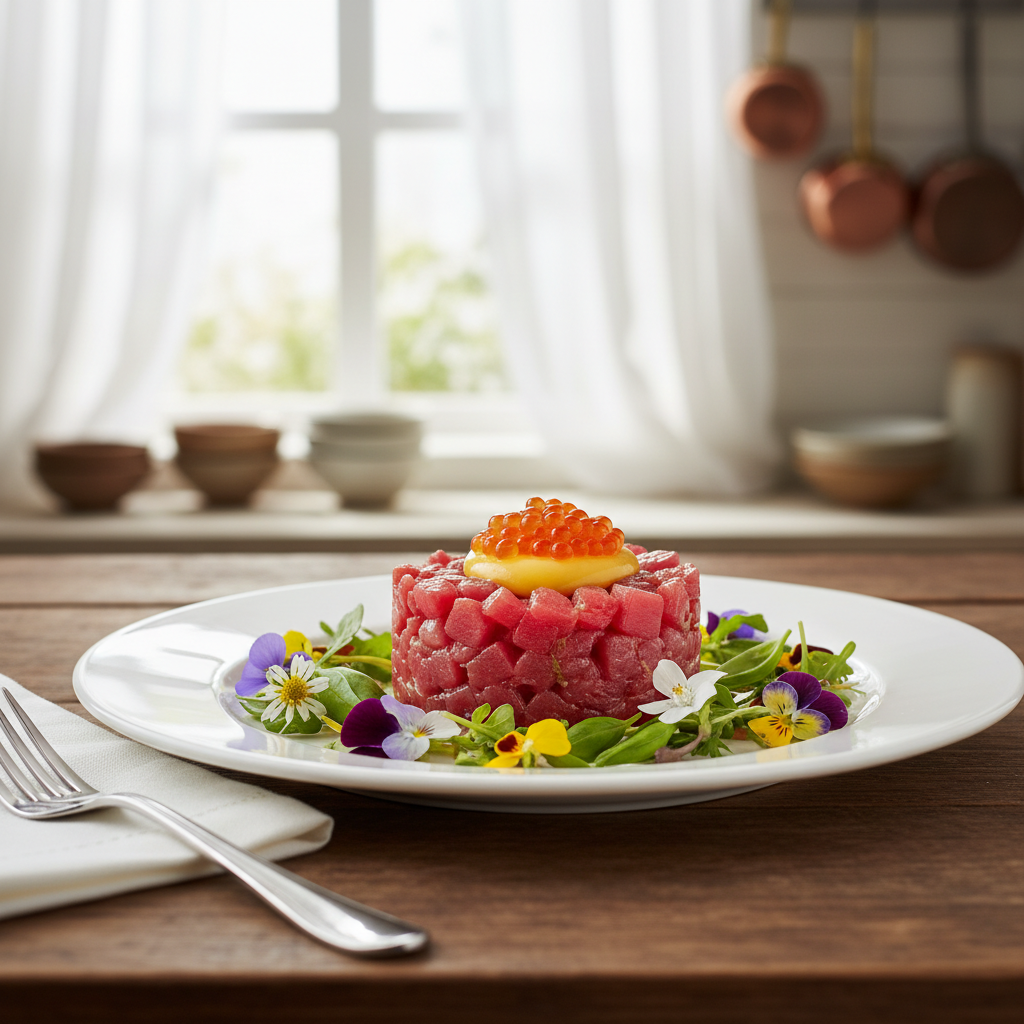
The last step in your cooking journey is to make the dish look great. To achieve a fine dining look at home, you need patience and a steady hand. Focus on how the dish looks to make sure it’s as impressive as it tastes.
Using Culinary Molds for Professional Plating
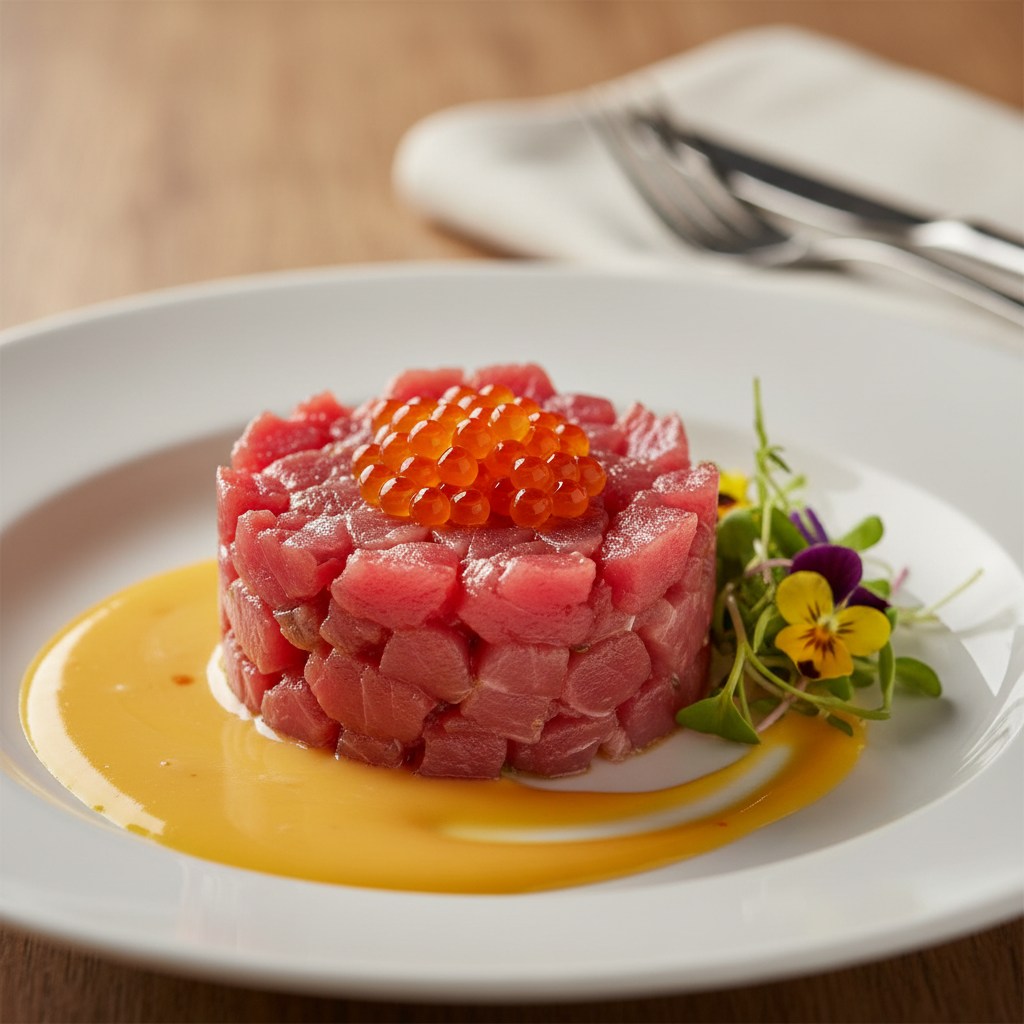
To get a clean, architectural look, use a stainless steel ring mold. This tool helps you create a symmetrical, high-end dish. Always cover the mold’s inside with plastic wrap before adding your ingredients.
This step keeps the metal from touching your delicate ingredients. It also helps the tartare come out smoothly without losing its shape. A well-formed cylinder is key for your exquisite presentation.
Layering the Tuna and Caviar
Start by filling the mold with your tuna mixture, pressing it down gently. Make sure it’s packed tightly so it keeps its shape when you remove the ring. Use a spoon to level the top for a uniform look.
After the tuna is set, add a small amount of salmon caviar in the center. The bright orange caviar looks great against the tuna’s deep red. This layering makes your dish look professional and highlights the quality of your ingredients.
Finishing Touches with Garnishes
The last touch is where you show off your detail work. A sprinkle of fresh herbs or micro-greens adds color and completes the fine dining feel. Use tweezers to place these garnishes for precise control.
Remember, less is often more when plating. You want to highlight the natural beauty of your ingredients, not hide them. With these steps, your dish will surely wow your guests.
Pairing and Serving Suggestions
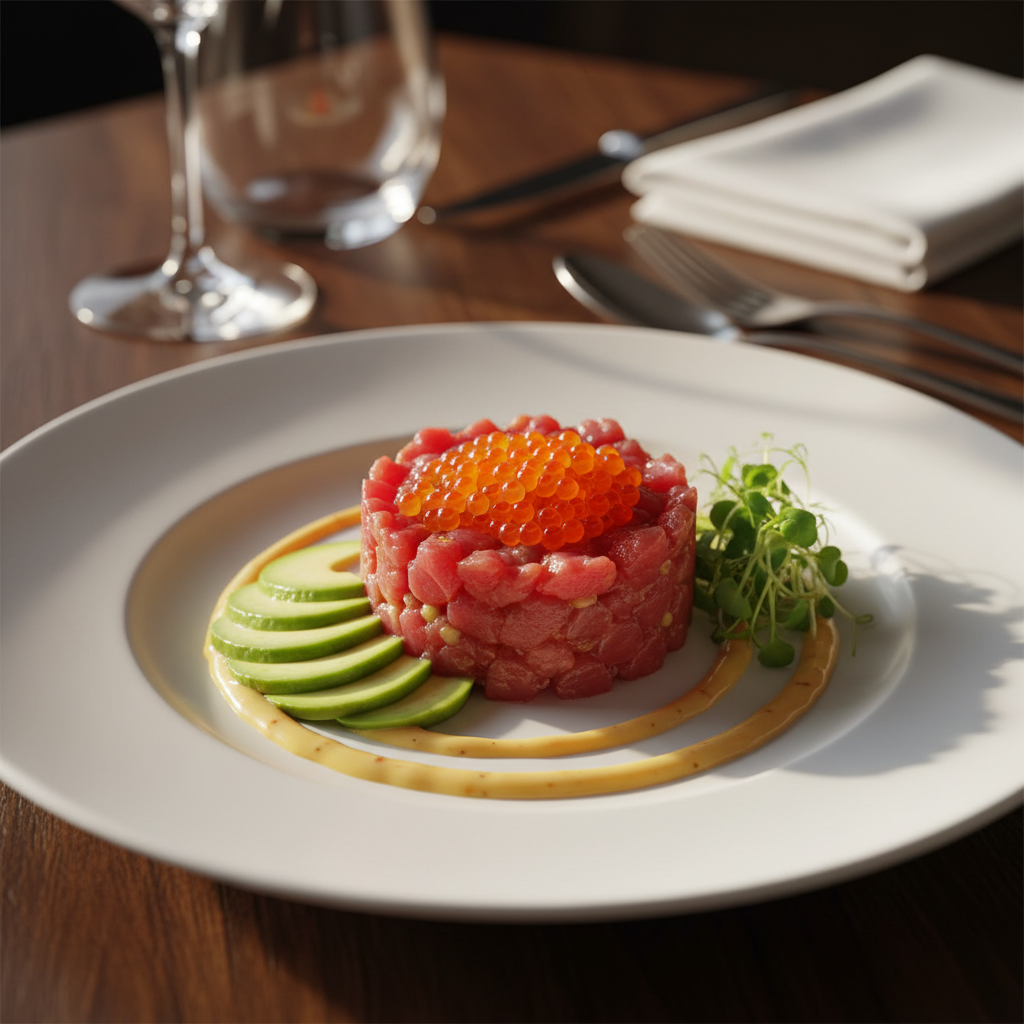
The success of a seafood dish depends on what you serve with it. It’s not just about cooking the fish. You need to think about how to present it to your guests. A good presentation balances flavors, textures, and looks.
Selecting Complementary Wines
Choosing the right wine can make your tuna and salmon caviar dish shine. Look for wines with high acidity to balance the richness of the sauce. Dry, crisp whites are usually the best match.
Here are some wine suggestions to improve your meal:
- Sauvignon Blanc: Its citrus flavors contrast well with the fatty tuna.
- Chablis: This wine’s mineral taste goes well with the caviar’s saltiness.
- Dry Rosé: A chilled rosé adds a refreshing touch without overpowering the fish.
Choosing the Perfect Accompaniments
Texture is key to enjoying your meal. The soft tartare needs something crunchy to balance it. This contrast keeps your taste buds interested.
Crispy Crostini and Microgreens
Pairing the tartare with crispy crostini or fried baguette is a great idea. Lightly toast the bread with olive oil and sea salt for extra flavor. This makes it easy for guests to enjoy the tartare.
Top your dish with fresh microgreens for an exquisite presentation. Radish sprouts or pea shoots add color and a peppery taste. They enhance the flavors of your dish beautifully.
Conclusion
Learning to make Tuna Tartare with Salmon Caviar and Egg Yolk Sauce turns your kitchen into a fancy bistro. It brings the luxury of fine dining right to your home.
You now know how to mix soft textures with strong, tasty flavors. Each step you take makes your dish a true masterpiece.
Using top-notch ingredients like sashimi-grade fish and fresh eggs really matters. Your guests will love the effort you put into this fancy appetizer.
Try out these techniques at your next big event. Improve your presentation and adjust the flavors to your liking.
Show off your skills with friends or family. Your adventure in gourmet cooking begins with this Tuna Tartare. It’s a classic dish that impresses any host.