Ever dreamed of bringing a mysterious allure of Venice to your home? Making a Squid Ink Risotto turns simple ingredients into a stunning dish. It brings coastal charm right to your table.
This dish is famous for its deep color and rich flavors. It’s perfect for a special dinner or celebration. It leaves a lasting impression on your guests.
Learning to make this seafood risotto might seem hard at first. But, it’s actually very rewarding. With the right steps, you can get that creamy texture that’s key to Italian cooking. Follow this recipe to serve a meal that will wow your guests and improve your cooking skills.
The Art of Squid Ink Risotto
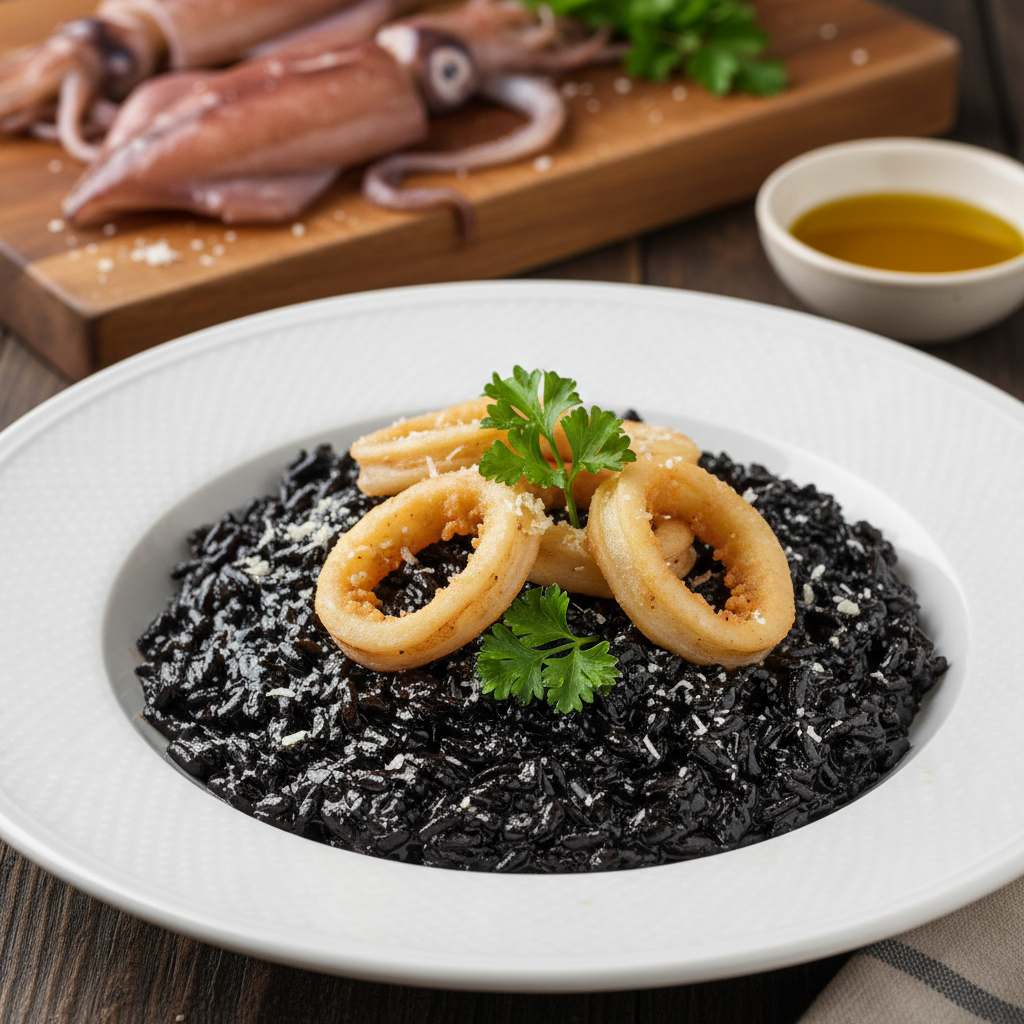
Cooking with squid ink turns a simple grain into a sophisticated dish of Italian cuisine. It’s more than a recipe; it’s a journey into the deep, mysterious flavors of the ocean. Mastering this technique brings a professional touch to your kitchen.
Understanding the Flavor Profile
The dish’s appeal comes from its unique, briny taste. Unlike other seafood, squid ink adds a subtle, savory depth. This depth lingers on your palate without overpowering the rice.
To achieve the right balance, you need to balance this intensity with fresh aromatics. This ensures a harmonious taste experience.
Achieving the right balance is key to a gourmet dish. When done right, the ink connects the rice’s starch with the seafood’s sweetness. This creates a complex taste that showcases the best of coastal Mediterranean cooking.
Why Squid Ink is a Gourmet Staple
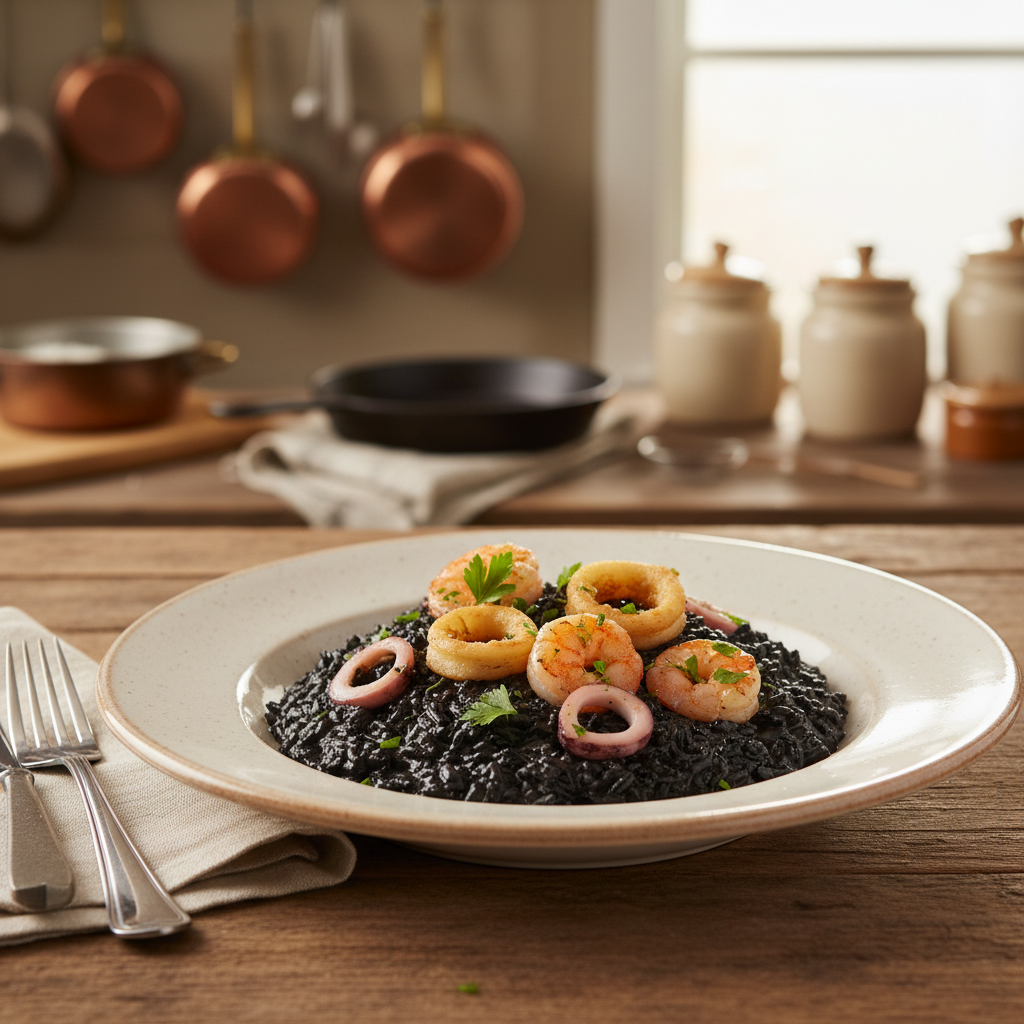
Chefs love squid ink for its ability to color and flavor food. It turns rice into a striking black risotto, offering a dramatic and elegant look. This is why it’s a prized ingredient in high-end cooking.
The ink also adds a unique mineral quality that’s hard to find elsewhere. It makes the meal memorable, turning a simple dish into a special event. Here’s how different elements contribute to your meal:
| Component | Flavor Contribution | Visual Impact |
|---|---|---|
| Squid Ink | Deep, Briny, Umami | Intense Black |
| Arborio Rice | Neutral, Creamy | White/Opaque |
| White Wine | Acidic, Bright | Translucent |
| Seafood Stock | Salty, Savory | Golden/Clear |
Essential Ingredients and Equipment
Creating a perfect Squid Ink Risotto starts before you even turn on the stove. It’s all about using top-quality ingredients for the right texture and flavor. This ensures your dish is truly a gourmet dish.
Selecting the Right Rice Varieties
The secret to a creamy texture is in the rice you choose. Not all grains have the right starch for a velvety sauce.
Why Carnaroli or Arborio are Best
Choose Carnaroli or Arborio rice for the best results. These Italian varieties have lots of amylopectin, which makes the sauce creamy.
- Carnaroli: Known as the “king of rice,” it keeps its shape well and tastes great.
- Arborio: A good choice for home cooks, it makes the dish creamy.
Sourcing High-Quality Squid Ink
Real squid ink gives your dish a deep, briny flavor. You can find it in small packets or jars at Italian markets or fancy grocery stores.
Make sure to buy pure ink without additives. A little ink goes a long way, so a small container is enough for many batches.
Necessary Kitchen Tools for Success
Having the right tools makes cooking easier. You need tools for even heat and to control the rice.
| Tool | Purpose | Benefit |
|---|---|---|
| Heavy-bottomed pot | Heat retention | Prevents scorching |
| Wooden spoon | Gentle stirring | Releases starch |
| Ladle | Broth addition | Controlled hydration |
A heavy-bottomed pot is essential to stop the rice from sticking. A sturdy wooden spoon is key for gentle stirring, which is crucial for the right consistency.
Preparing Your Seafood and Stock
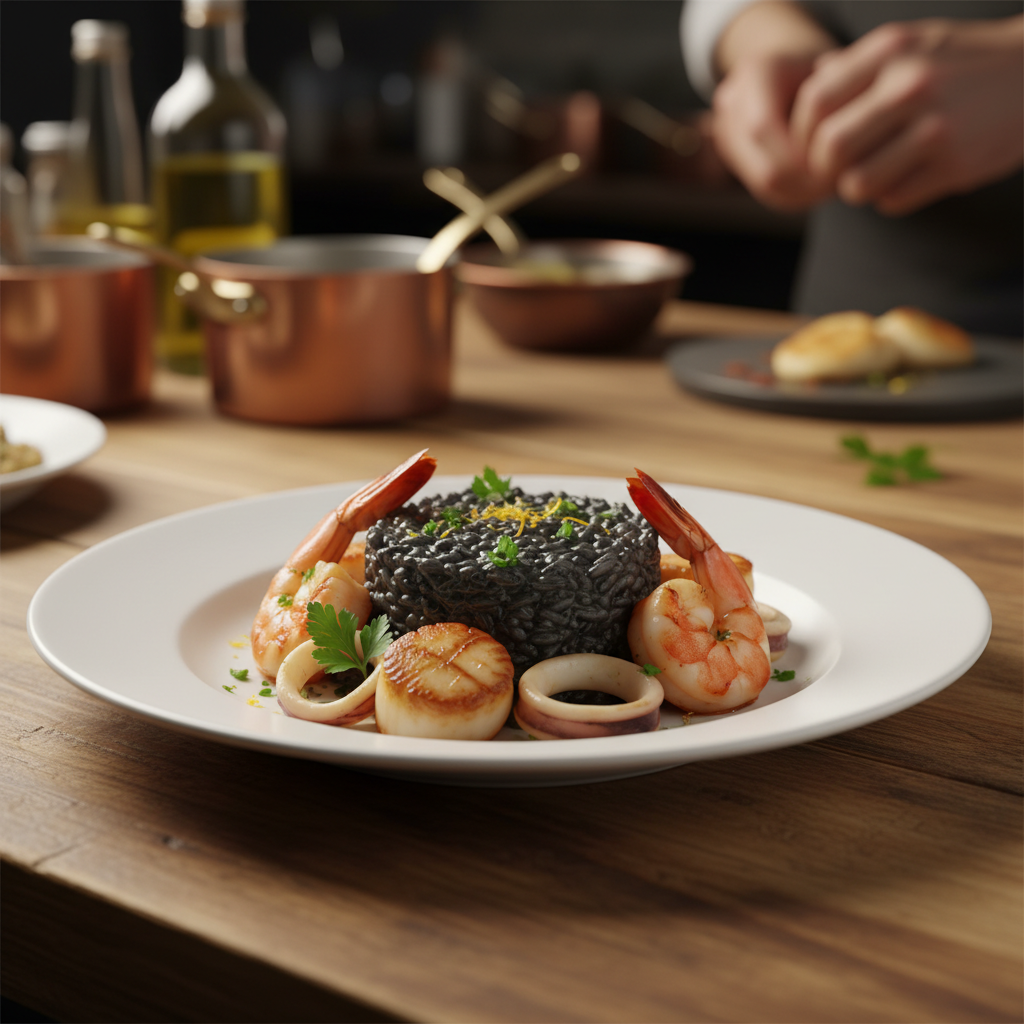
The secret to a deep, oceanic flavor in your cooking lies in how you handle your broth and fresh squid. A truly exceptional seafood risotto depends on the quality of these components. They provide the essential foundation for the rice to absorb during the cooking process.
Crafting a Rich Seafood Broth
To build a robust base, use shells from shrimp, lobster, or crab. Sauté these shells in olive oil with onions, garlic, and fennel until they turn a vibrant pink. Deglazing the pan with a splash of white wine helps release the concentrated flavors stuck to the bottom.
Cover the mixture with water and simmer gently for at least thirty minutes. Strain the liquid through a fine-mesh sieve to ensure your broth remains clear and free of grit. This liquid gold will infuse your seafood risotto with a professional depth that store-bought stocks simply cannot replicate.
| Ingredient | Purpose | Preparation Method |
|---|---|---|
| Shrimp Shells | Umami Base | Sauté until pink |
| Fennel Bulb | Aromatic Sweetness | Thinly sliced |
| Dry White Wine | Acidity | Deglaze the pan |
| Cold Water | Extraction | Simmer gently |
Cleaning and Prepping Fresh Squid
Fresh squid requires a gentle touch to maintain its delicate texture. Start by pulling the head and tentacles away from the body tube. Remove the transparent quill from inside the tube and discard it along with the internal organs.
Rinse the tube thoroughly under cold running water to remove any remaining debris. Peel away the thin, purple-tinted skin to reveal the clean, white flesh underneath. Proper preparation of your protein ensures that your seafood risotto maintains a clean, oceanic flavor profile.
Handling Ink Sacs Safely
The ink sac is a small, silver-colored gland located near the head of the squid. You must exercise extreme caution when removing it to avoid accidental rupture. Use a sharp knife or kitchen shears to carefully detach the sac from the surrounding tissue.
Place the extracted ink into a small bowl and mix it with a teaspoon of warm water or broth to prevent it from drying out. Preserving the ink properly is vital, as it provides the signature color and briny intensity that defines a classic squid ink dish.
Step-by-Step Guide to Cooking Squid Ink Risotto
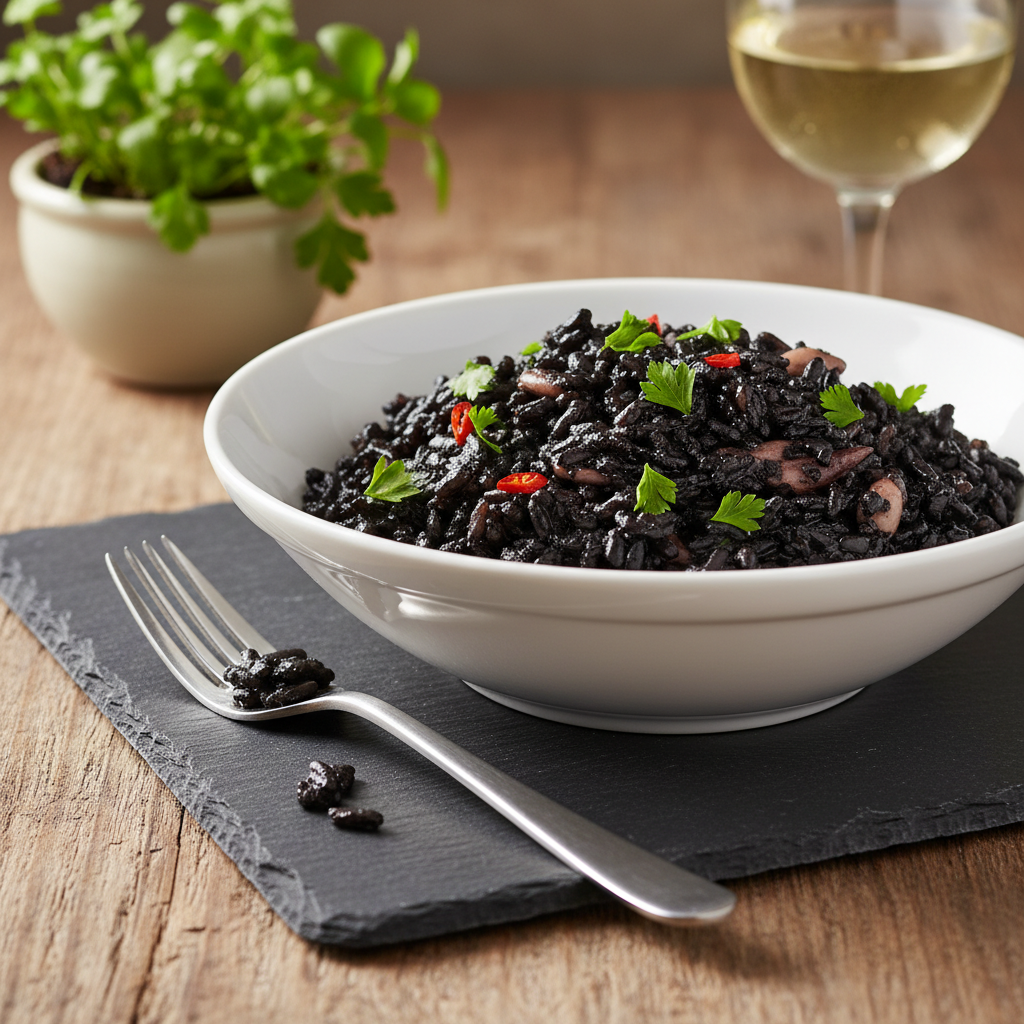
Making a Squid Ink Risotto is all about patience and precision. Follow this recipe to make sure every rice grain soaks up the sea’s deep flavor.
Sautéing the Aromatics
Start by heating olive oil or butter in a big pan over medium heat. Add minced shallots or onions and cook until they’re translucent and smell good. Make sure they don’t brown, as you want a sweet base for your dish.
Toasting the Rice for Depth
Put your Arborio or Carnaroli rice in the pan and stir well to coat each grain. Toasting the rice for two to three minutes is essential to get a nutty flavor. You’ll know it’s ready when the edges start to look transparent.
Deglazing with Dry White Wine
Now, add a bit of dry white wine to deglaze the pan. This step helps to scrape up tasty bits from the bottom. Let the wine evaporate completely before moving on. It adds a needed acidity to balance the dish’s richness.
The Gradual Addition of Broth
Start adding hot seafood broth a ladle at a time. Stir often to help the rice release its starches. Wait until most of the liquid is absorbed before adding more. This keeps the risotto creamy.
Incorporating the Squid Ink
To get a deep, black color, add half of your squid ink in the middle of cooking. Stir the rest in during the last minutes. This two-step method makes sure the color is even and intense throughout the recipe.
| Cooking Phase | Primary Goal | Key Indicator |
|---|---|---|
| Aromatics | Flavor Base | Translucent onions |
| Toasting | Nutty Texture | Transparent edges |
| Deglazing | Acidity Balance | Wine evaporation |
| Broth Addition | Starch Release | Creamy emulsion |
Achieving the Perfect Creamy Texture
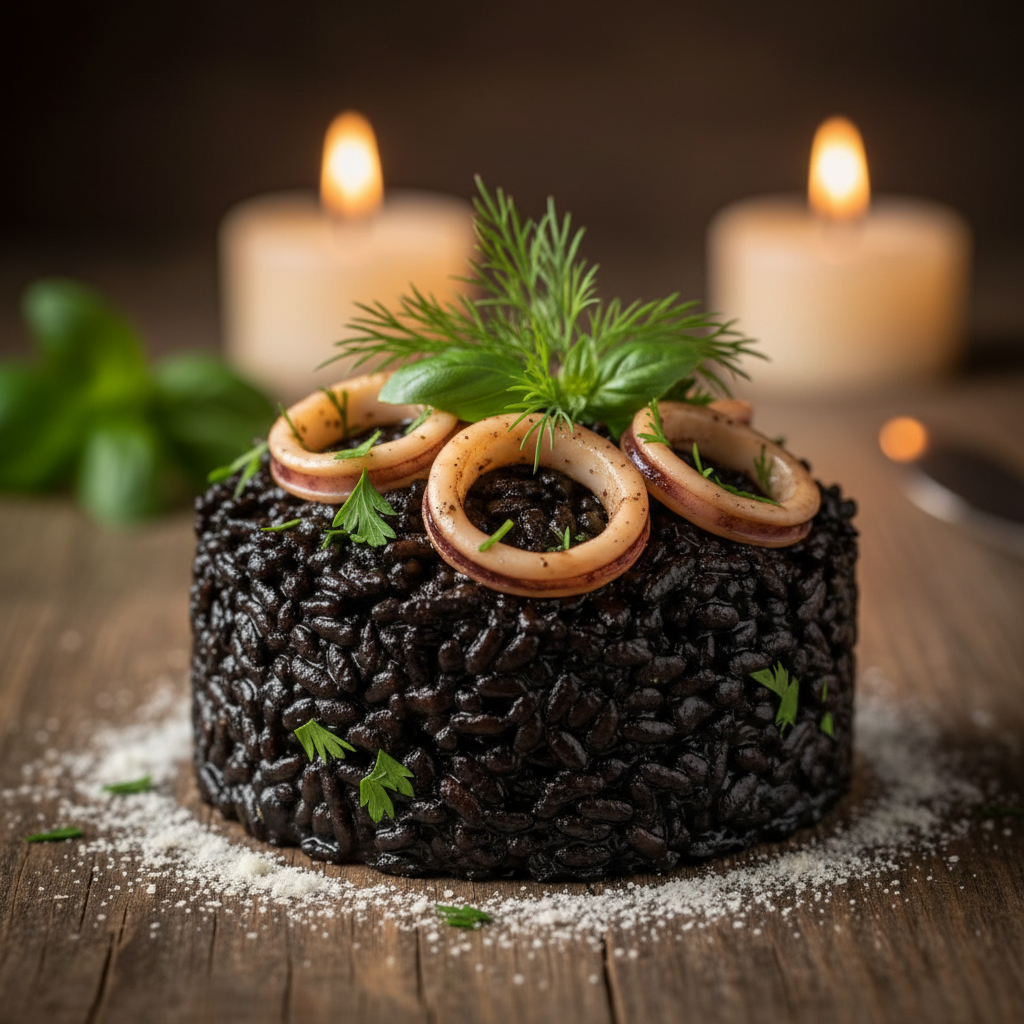
Making a black risotto with a velvety texture is a true test of a chef’s skill. This dish turns rice grains into a rich, cohesive meal. It coats your palate perfectly.
The Importance of Constant Stirring
Stir your rice gently and consistently while it cooks. This action creates friction between the grains. It helps release natural starches into the broth.
As the starch escapes, it thickens the liquid, making it creamy. Patience is your greatest asset here. Rushing can make the texture grainy or uneven.
The Mantecatura Technique
The mantecatura is a key step in traditional Italian cuisine. It happens after removing the pan from the heat. You vigorously beat cold fats into the risotto to emulsify the sauce.
Adding these fats at the end stabilizes the emulsion and gives a glossy finish. These cooking tips make your dish look as good as it tastes.
Adding Cold Butter and Parmesan
Classic recipes use high-quality butter and aged cheese. Cold butter helps the fat bind with the starchy liquid.
Some Italian cuisine purists avoid dairy with seafood. But, a small amount of Parmesan adds depth of flavor. Always taste before adding extra salt, as the cheese is savory.
Follow these guidelines to get the perfect black risotto every time.
| Technique | Purpose | Result |
|---|---|---|
| Constant Stirring | Starch Release | Creamy Base |
| Mantecatura | Emulsification | Glossy Finish |
| Cold Fat Addition | Binding | Velvety Texture |
Using these cooking tips will help you make a restaurant-quality meal at home.
Flavor Enhancements and Garnishing Techniques
Improving your dish needs attention to detail and a bit of skill. After cooking, the last touches make your seafood risotto look and taste great. These small steps make your meal stunning and tasty.
Balancing Brine with Citrus
Squid ink’s deep flavors can feel too much. A bit of acidity is key to balance. Add a squeeze of fresh lemon juice or some zest just before serving.
This move lightens the dish’s richness. It brings out the seafood’s natural sweetness. Make sure the citrus doesn’t overpower the dish’s delicate taste.
Visual Presentation Tips
Plating is the last step. The ink makes the rice a deep black, perfect for creativity. Choose a wide, shallow bowl to show off the rice’s texture and shine.
Clean your plate’s edges with a damp cloth for a neat look. A polished presentation shows your hard work and invites guests to enjoy it.
Using Fresh Herbs for Contrast
Color contrast is crucial with a dark base. Fresh parsley adds a bright green that makes the dish feel lively. Try chives or microgreens for more texture and height.
Sprinkle your herbs in the seafood risotto‘s center. This simple trick adds a pro touch, making your meal seem like it’s from a restaurant.
Common Mistakes to Avoid
Mastering black risotto needs careful attention to avoid common mistakes. Even skilled cooks can struggle with heat and timing. Follow these cooking tips to make your dish perfect.
Preventing Overcooked Rice
The biggest mistake is losing the al dente texture. Rice should have a slight bite, not be mushy. Watch the heat and don’t add too much broth at once.
Stir the rice often to release starch and make a creamy sauce. If the liquid absorbs too fast, lower the heat. Watching the pan closely keeps your black risotto perfect.
Managing Salt Levels in Seafood Dishes
It’s key to balance the salt in your dish. Squid ink and seafood stock are salty. Taste the broth before adding it to the rice to avoid too much salt.
Start with low-sodium stock for better control over seasoning. If it’s too salty, a squeeze of lemon can help. Season slowly, adding salt little by little.
| Common Mistake | Resulting Issue | Corrective Action |
|---|---|---|
| High Heat | Mushy black risotto | Lower heat immediately |
| Excessive Salt | Overpowering brine | Use unsalted stock |
| Ignoring Timing | Uneven cooking | Follow expert cooking tips |
Conclusion
Bringing Venice’s flavors into your kitchen makes for a memorable meal. Mastering this recipe shows off your cooking skills with confidence.
Using top-notch ingredients and the right mantecatura technique is crucial. It turns simple parts into a gourmet dish.
We hope these squid ink recipes spark your creativity in seafood cooking. Italian cuisine offers bold flavors and beautiful presentation.
Keep practicing to get the timing and texture just right. Share your dishes with loved ones to celebrate cooking’s joy. Your squid ink recipe journey continues with each meal you serve.