
That moment of doubt in the kitchen is all too familiar. You open the refrigerator, pull out that package of poultry, and wonder: Is this still safe to feed my family? That nagging concern about food safety touches something deep in all of us—the fundamental need to protect our loved ones from harm.
Raw poultry carries particular risks that demand our attention. Dangerous bacteria like E. coli can thrive on improperly handled meat, posing serious health threats to people. When poultry isn’t stored correctly, these microorganisms multiply rapidly, increasing the risk of foodborne illness.
This comprehensive guide takes the guesswork out of handling your poultry. You’ll discover why proper techniques matter so much more for this type of meat compared to others. We’ll walk you through essential food safety principles that every home cook should master.
By following this advice, you’ll gain confidence in your kitchen practices and understand exactly when your food is safe to eat. You’ll learn how to prevent bacterial growth while maintaining freshness, ensuring everyone in your household stays healthy and safe.
Essential Guidelines for Safe Chicken Storage
Let’s dive into the two most powerful tools you have for keeping your poultry safe. Mastering these basics will dramatically reduce your risk of foodborne illness.
Understanding Temperature and Timing Requirements
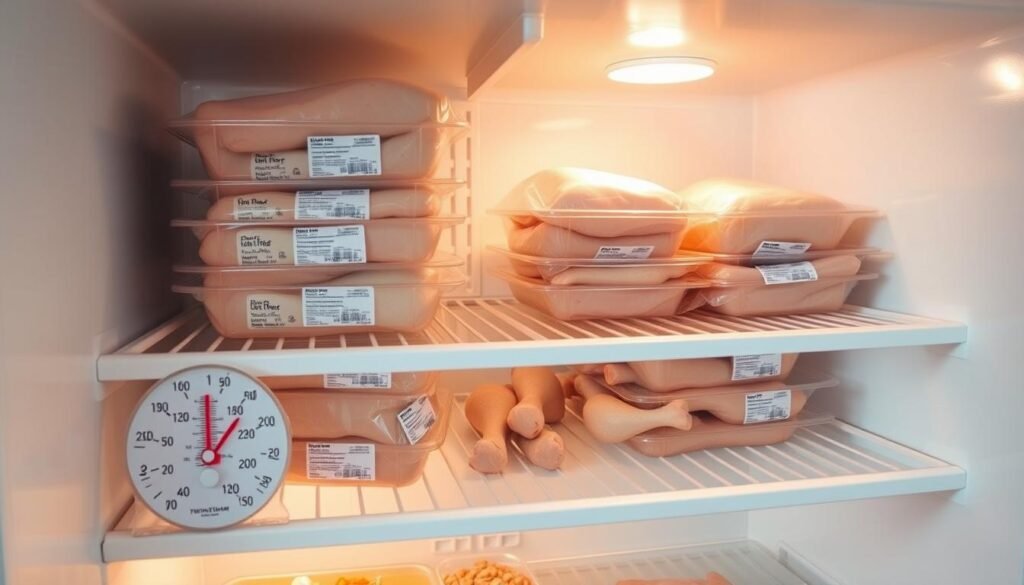
Controlling temperature is your first defense against bacteria growth. Your refrigerator must stay between 32°F and 40°F (0°C to 4°C). Your freezer should be at 0°F (-18°C) or colder.
At higher temperatures, harmful microorganisms multiply quickly. Timing is also critical. Use or freeze fresh meat within a couple of days to minimize risk.
Minimizing Cross-Contamination in Your Kitchen
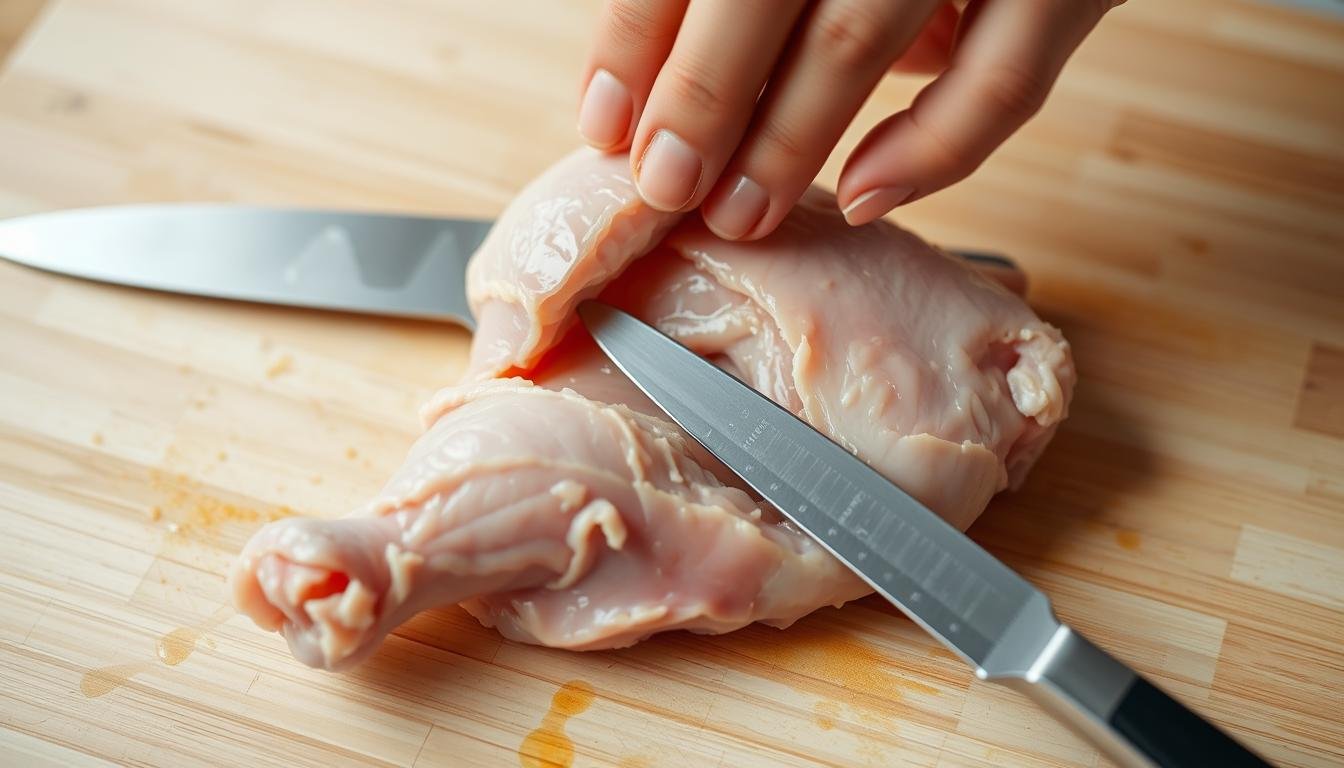
Cross-contamination occurs when bacteria spread from raw meat to other foods. This is a major kitchen hazard. Never use the same cutting board for poultry and ready-to-eat items like vegetables without washing it thoroughly with hot, soapy water first.
You should also avoid washing your poultry. This practice splashes juices around your sink, spreading contamination. Raw poultry can harbor dangerous bacteria like Salmonella.
Proper placement in the fridge is key. Keep raw meat sealed and on the bottom shelf to prevent juices from dripping onto other foods.
Safe Chicken Storage Methods
The right approach to keeping your poultry fresh involves understanding both refrigeration and freezing methods. Each technique serves different needs in your kitchen routine.
Refrigeration Best Practices
Your refrigerator becomes your best friend for short-term poultry preservation. Always place raw items on the lowest shelf to prevent dripping.
Maintain your fridge temperature between 32°F and 40°F for optimal safety. Fresh poultry typically lasts 1-2 days in the refrigerator before quality begins to decline.
Proper Freezer Techniques and Preventing Freezer Burn
Freezing extends your poultry’s lifespan significantly when done correctly. The key is removing as much air as possible from packaging.
Freezer burn occurs when air reaches the meat’s surface, creating dry, white patches. While safe to eat, affected areas will have compromised texture and flavor.
Use heavy-duty freezer bags or vacuum sealing for best results. Wrap items tightly before placing them in your freezer at 0°F or below.
| Poultry Type | Refrigerator (Days) | Freezer (Months) |
|---|---|---|
| Raw Parts (breasts, thighs) | 1-2 days | 9 months |
| Whole Bird | 1-2 days | 12 months |
| Ground Poultry | 1-2 days | 3 months |
| Cooked Plain | 3-4 days | 4 months |
| Cooked with Gravy | 1-2 days | 6 months |
Handling and Preparing Chicken for Optimal Storage

The steps you take before your poultry even hits the fridge or freezer are just as important as the temperature settings. Proper wrapping and labeling are your best friends for maintaining quality and safety.
Effective Wrapping and Labeling Tips
Start by using moisture-proof bags or wrap. Press out all the air before sealing to create an airtight package. This prevents freezer burn and contains juices.
For the best results, try the double-wrapping method. Wrap individual pieces first, then place them all in a larger freezer bag. Always label every package with the date and contents. This helps you use older items first.
If you buy in bulk, divide large packs into meal-sized portions. This makes it easier to store and thaw only what you need.
Following Food Safety Rules for Raw and Cooked Chicken
Hand hygiene is non-negotiable. Wash your hands with warm water and soap for 20-30 seconds before and after handling raw meat.
Never thaw frozen poultry on the counter. The safe ways are in the refrigerator (about 5 hours per pound), in cold water (change it every 30 minutes), or using your microwave’s defrost setting.
After cooking, you must refrigerate or freeze the food within two hours. Place it in a shallow container for faster cooling. Clean all utensils and surfaces that touched raw meats immediately to prevent cross-contamination in your home.
Conclusion
With these essential guidelines at your fingertips, you can confidently handle poultry in your kitchen. You now understand how to maintain quality and prevent contamination through proper temperature control and handling.
Remember that your fridge should stay between 32-40°F and your freezer below 0°F. Use raw chicken within 1-2 days or freeze it promptly. Cooked leftovers remain safe for 3-4 days when refrigerated correctly.
Proper frozen preservation maintains both safety and quality, as shown in food safety research. This approach prevents waste and ensures your meals taste their best.
Making these practices part of your routine protects the people you cook for. You’ll never doubt your poultry again, knowing exactly when it’s safe to enjoy.
FAQ
How long can I keep raw poultry in the refrigerator?
You can safely store fresh, uncooked meat in your fridge for 1 to 2 days. Always check the “sell-by” date on the package, but remember that date is for the store. Once you get it home, the clock starts ticking to prevent bacteria growth.
What’s the best way to thaw frozen chicken?
The safest method is to thaw it in the refrigerator. This keeps the food at a constant, safe temperature. You can also use the cold water method by submerging the sealed package in cold water, changing the water every 30 minutes. Avoid leaving it on the counter, as this increases the risk of illness.
How can I tell if my chicken has gone bad?
Trust your senses. If the meat has a sour or unpleasant odor, a slimy texture, or a noticeable color change to gray or green, it’s time to throw it out. When in doubt, remember that food safety is paramount—it’s better to be safe than sorry.
Can I refreeze chicken after it has been thawed?
You can refreeze it if you thawed it in the refrigerator and it has stayed at temperatures below 40°F. However, refreezing may affect the quality and texture due to the loss of juices. If you thawed it using the cold water or microwave method, you should cook it first before freezing.
What’s the key to preventing cross-contamination in my kitchen?
The most important rule is to keep raw meats and their juices away from ready-to-eat foods like vegetables. Use separate cutting boards and plates, and always wash your hands, utensils, and surfaces with hot, soapy water after handling poultry to avoid contamination.